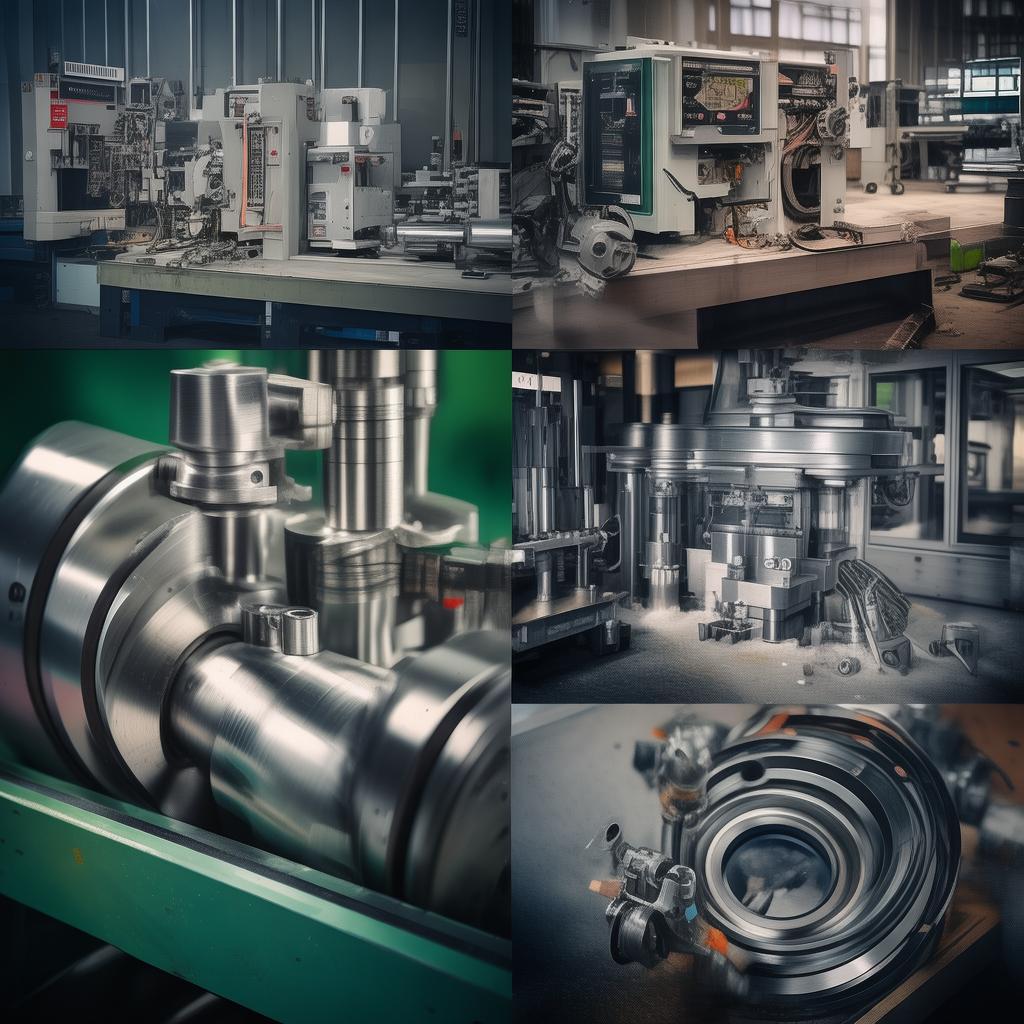
production tooling
Product Overview
Industrial production tooling is built to help manufacturers produce consistent, repeatable parts at scale—supporting everything from forming and machining to assembly and inspection-ready end products. In the metalworking, automotive supply chain, and industrial fabrication sectors, tooling is often the difference between stable cycle times, predictable tolerances, and controlled scrap rates. This offering is designed for production environments where durability, maintainability, and reliable performance under repeat loads are essential.
Key Features
- Built for repeatability: tooling geometry and wear surfaces are engineered to maintain part-to-part consistency over production runs.
- Reduced downtime: robust construction and practical service access help streamline maintenance and speed up turnaround between batches.
- Higher first-pass quality: stable fit, controlled alignment, and reliable clamping/support promote fewer reworks and less variability.
- Process-ready compatibility: supports standard production setups (fixtures, jigs, presses, machining cells) with predictable installation and setup practices.
- Designed for maintenance planning: wear components and critical interfaces are selected and managed to support inspection intervals and replacement cycles.
- Scalable for production: suitable for ramp-up phases where engineers need dependable output as demand increases.
- Engineering support mindset: collaboration with your team helps align tooling behavior with your part requirements, production constraints, and quality goals.
Technical Specifications
| Parameter | Specification |
|---|---|
| Tooling type | Jigs/fixtures, forming or forming-assist tooling, assembly tooling, or process support tooling (application-dependent) |
| Material compatibility | Configurable for common industrial metals and alloys; reviewed to match your cycle loads and surface requirements |
| Dimensional control approach | Reference features and datum strategy aligned to your inspection points and downstream operations |
| Wear management | Critical interface design supports planned inspection and replacement where needed |
| Installation & setup | Designed for practical alignment procedures to support repeatable changeover |
| Quality documentation | Includes build and configuration records aligned to your procurement requirements |
| Lead time | Confirmed during quoting after review of drawings, quantities, and process constraints |
Application Scenarios
- Progressive part manufacturing where consistent positioning and support reduce variation across the lot.
- Assembly lines that require stable alignment and repeatable clamp/locate behavior to protect tolerance stack-ups.
- Machining cells that depend on fixtures to hold work securely while supporting predictable machining outcomes.
- High-mix environments where quick changeover and maintainable interfaces help sustain throughput.
- Quality-focused production runs where inspection-ready geometry must be protected from drift and wear.
Advantages
Compared with generic fixtures or one-size-fits-all jigs, this production tooling approach is tailored to your part’s functional surfaces, datum strategy, and production workflow. That means less guesswork at installation, fewer “works on my machine” outcomes, and a clearer path to stable quality as volumes scale.
- Better alignment with your tolerances and inspection points, improving first-pass acceptance.
- More maintainable wear interfaces, supporting scheduled upkeep rather than unplanned disruption.
- Process-oriented design that considers how the tooling interacts with your cycle sequence and handling methods.
- Lower total cost of ownership by reducing scrap, rework, and downtime associated with inconsistent tooling behavior.
Why Choose Us
We supply production tooling and industrial tooling solutions with an engineering-first mindset—focused on manufacturability, serviceability, and dependable outcomes in your production setting. Our team works with procurement and engineering stakeholders to clarify requirements early, document decisions clearly, and deliver tooling that can be installed and operated with confidence.
- Transparent communication from quotation through production readiness.
- Configuration control to minimize integration surprises during your changeover.
- Support for commissioning so the tooling meets its intended in-line behavior.
- A practical approach to documentation that helps your quality system and operators.
If you share your drawings, target cycle, and the machines/processes involved, we’ll confirm the most appropriate tooling strategy for your application.
FAQ
1) What information do you need to quote production tooling?
Send your part drawing (or CAD), material, target tolerances/critical dimensions, required quantity, and the machine/process where the tooling will be used.
2) Can you support updates or revisions if our process changes?
Yes. Tooling is often refined during commissioning; we can evaluate design changes to address drift, wear, or assembly handling needs.
3) How do you ensure the tooling will maintain quality across the run?
We align the tooling’s locating/support strategy to your inspection points and plan wear-critical interfaces to support repeatability over time.
4) What’s the typical commissioning process after delivery?
We coordinate installation guidance and functional checks with your team to validate fit, alignment, and operational behavior before full-rate production.
5) Is this suitable for both prototype and production volumes?
It can be. For prototype phases, we focus on validation and repeatability; for production, the emphasis is on durability, maintainability, and stable output.
Ready to lock in a tooling strategy that stabilizes quality and reduces downtime? Share your part details and production requirements, and we’ll prepare a quotation and recommendation for your next production run—including the right configuration of production tooling for your line.