industrial laser cutting price
Product Overview
Industrial laser cutting is a modern, high-precision manufacturing service used across metal fabrication, machinery components, and industrial equipment supply chains. When you need dependable cut quality with predictable lead times, comparing an industrial laser cutting price alongside material handling, tolerance targets, and production volume becomes the practical path to cost control. Our laser cutting workflow is built for procurement-minded buyers who want consistent part geometry, minimized rework, and clear pricing logic for scalable production.
Whether you’re sourcing prototypes, replacing legacy cutting methods, or expanding throughput for serial orders, we help you balance cost, speed, and performance—so the final delivered part matches engineering intent, not assumptions.
Key Features
- Cut quality designed for fit and assembly: Smooth edges and controlled kerf help reduce finishing time and improve downstream assembly alignment.
- Process consistency for repeat orders: Stable production parameters support uniform results across batch runs, not just the first job.
- Transparent pricing drivers: We structure quotes around material type/thickness, sheet utilization, geometry complexity, and quantity—supporting predictable budgeting.
- Efficient nesting and material utilization: Optimized layouts help improve yield, which can reduce the effective per-part cost of laser cutting.
- Engineering-ready documentation: Clear communication on file formats, tolerances, and revision handling minimizes production interruptions.
- Scalable from prototype to production: Supports low-volume validation and higher-volume scheduling without forcing you to switch vendors midstream.
- Quality checks at key steps: Inspection points are integrated to catch issues early, protecting your schedule and reducing rework risk.
Technical Specifications
| Parameter | Specification |
|---|---|
| Process Type | Industrial laser cutting service (sheet and panel cutting) |
| Supported Materials | Ferrous and non-ferrous metals (confirm per quote) |
| Geometry Complexity | Open/closed profiles, holes, slots, and mixed feature parts |
| File/Model Input | DXF/DWG/STEP or equivalent manufacturing-ready formats (as specified) |
| Quality Checks | Dimensional review at critical features; output inspection per job requirement |
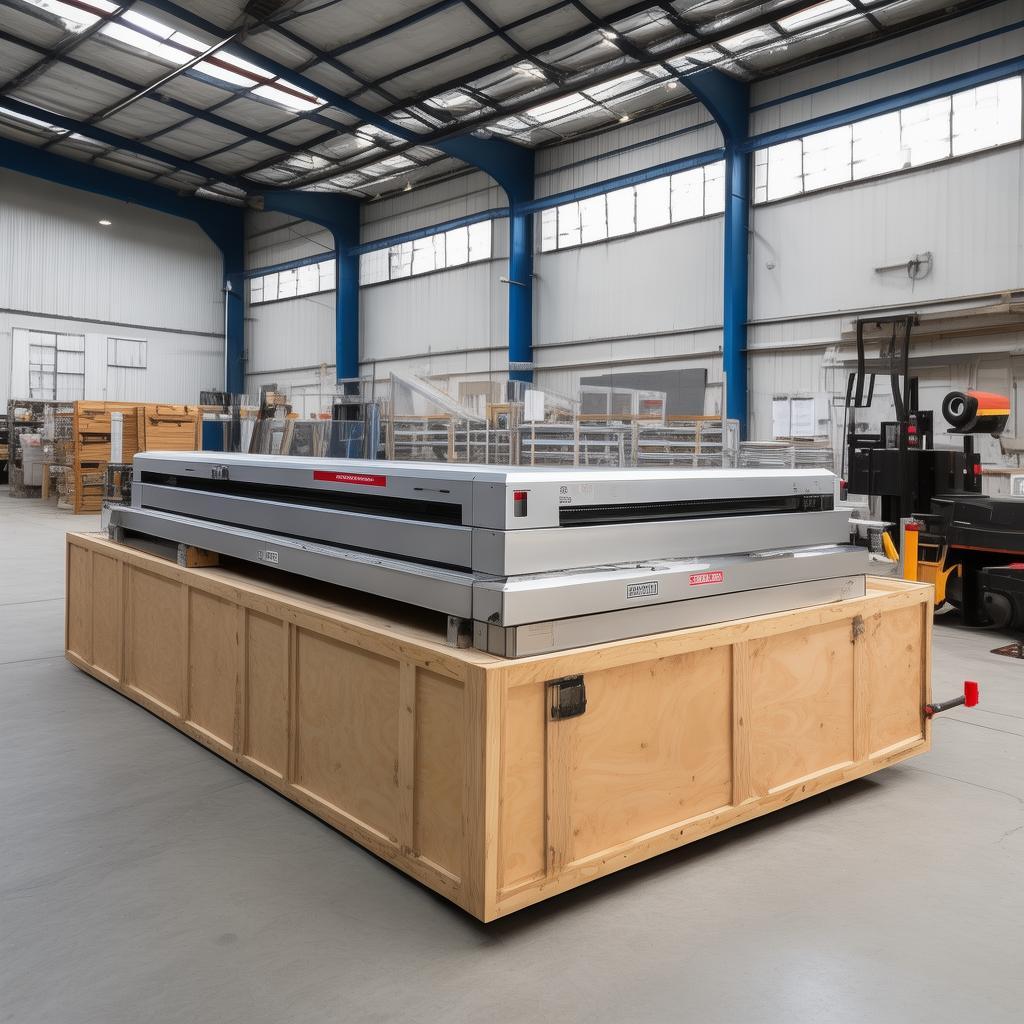
| Packaging & Handling | Production packaging to support safe transport and reduced edge damage |
| Lead Time | Quoted based on schedule, quantity, and part complexity |
Application Scenarios
- Machine frame and bracket fabrication: Laser-cut components for repeatable alignment and reduced secondary machining.
- Industrial enclosures and housings: Complex panels and venting features for protection and airflow in equipment.
- Transport and material handling parts: Profiles and openings cut for assembly efficiency in harsh-duty environments.
- Prototype-to-production transition: Validating design intent quickly, then scaling the same process for serial manufacturing.
- Custom tooling and small-batch production: Efficient layouts that support flexible ordering without long tooling lead times.
Advantages
Generic cutting quotes often focus only on sheet thickness and ignore the real determinants of delivered cost. Our approach is centered on controllable production variables—so your procurement team can forecast outcomes more accurately and avoid budget surprises.
- Optimized nesting improves material yield, helping reduce the effective cost per part even when complexity rises.
- Quality gates at critical steps reduce the likelihood of late-stage rework, which is where many “cheap” options fail.
- Clear communication on files and tolerances prevents cycle-time delays caused by revisions and ambiguity.
- A production-minded workflow supports both one-off builds and repeat orders—important for multi-site manufacturers and distributors.
- When you evaluate industrial laser cutting price, we help you understand the quote structure so you can compare fairly against alternative fabrication routes.
The result is a smoother path from drawing to shipped parts—without sacrificing engineering requirements to chasing the lowest number on the RFQ.
Why Choose Us
We support international procurement by focusing on repeatability, communication, and delivery reliability. Our team works directly with engineering and purchasing to clarify requirements early and keep production moving.
- RFQ clarity: Fast quote support based on material, geometry, quantity, and delivery expectations.
- Procurement-friendly documentation: Communication that aligns with supplier management workflows.
- Production accountability: Process discipline that reduces variance across runs.
- Packaging for transport: Handling practices designed to protect cut edges and maintain part integrity.
- Cost transparency: We help explain the drivers behind pricing for laser cutting so stakeholders can approve with confidence.
If you’re comparing laser cutting cost across suppliers, we’ll support a like-for-like assessment by highlighting which parts of the quote relate to complexity, handling, and production schedule.
FAQ
1) How is the industrial laser cutting price determined for my parts?
Pricing is typically driven by material type and thickness, part geometry complexity (profiles, holes, slots), quantity, and nesting efficiency. Lead time and handling requirements can also affect the final quote.
2) What file formats do you accept for RFQs?
We can work with manufacturing-ready formats such as DXF, DWG, and STEP (or equivalent). Share the model and drawing details you have, and we’ll confirm suitability for cutting layout.
3) Can you cut mixed-feature parts in one batch?
Yes. Mixed profiles, holes, and internal cutouts can be planned in optimized layouts to reduce material waste and improve throughput—often improving the real-world laser cutting cost versus separate manufacturing steps.
4) Do you support prototype orders and then production quantities?
Yes. We can handle validation runs and then scale to serial output, keeping process planning consistent to avoid surprises between prototype and production. This is especially helpful when you’re monitoring industrial laser cutting price over time.
5) How do you handle tolerances and revision changes?
We review critical dimensions and agree on tolerance expectations early. If you provide revised drawings or updated models, we’ll confirm impact to nesting, cycle time, and delivery schedule before proceeding.
6) What should I send to get an accurate quote quickly?
Send the CAD/DXF model, material and thickness, quantity, any target tolerances or critical dimensions, and your required delivery date. If you already know your preferred packaging or shipping method, include that as well.
Need help comparing suppliers or securing the best value for your next run? Request a quotation with your drawings and material details—our team will review your requirements and respond with a clear, procurement-ready cost breakdown aligned to your schedule.