
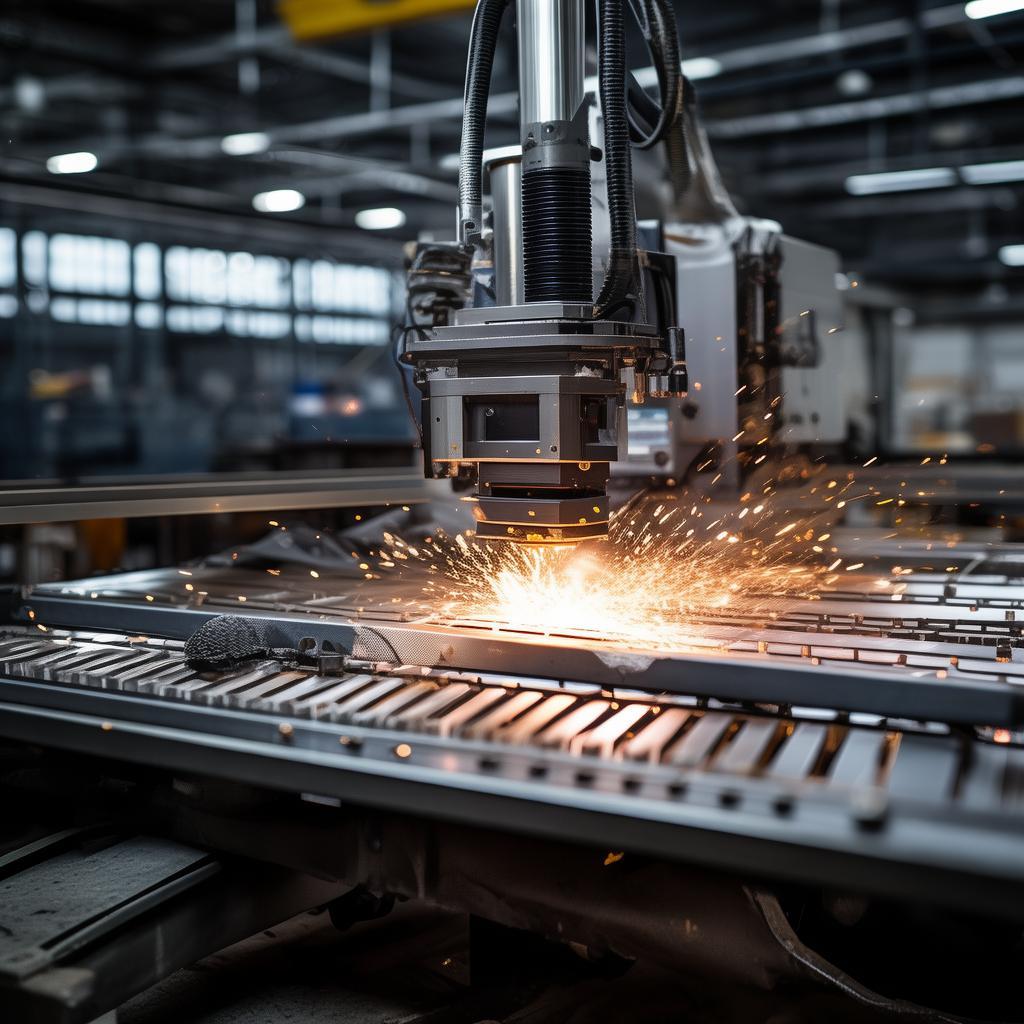
CNC lathe for bearing housings
Product Overview
A CNC lathe for bearing housings is a precision turning machine designed to produce accurate, repeatable cylindrical components used in bearings, seals, and rotating assemblies. In bearing manufacturing and industrial machinery production, housing bores, outer diameters, and locating features must meet tight dimensional tolerances to ensure smooth rotation and reliable alignment. This CNC turning solution is built to streamline setup, improve machining consistency, and support efficient production runs—from prototype batches to high-volume supply for OEMs and tier manufacturers.
With rigid construction, programmable tooling paths, and stable machining performance, a CNC lathe for bearing housings helps reduce rework, shorten lead times, and standardize quality across parts and shifts.
Key Features
- Stable turning for housing accuracy: optimized workflow and controlled machining paths support consistent bore/diameter geometry for bearing fit.
- Repeatable production setup: CNC programming reduces manual adjustments, enabling reliable part-to-part matching during batch work.
- Efficient cycle times for throughput: streamlined operations help shorten machining windows for housing runs where clock time matters.
- Flexible tooling for diverse bearing housings: handle multiple diameters, steps, and features without extensive redesign of the process.
- Process reliability for quality control: supports consistent surface generation and predictable dimensions, simplifying inspection planning.
- Operator-friendly programming and operation: reduce training time and make job execution easier for day-to-day production teams.
- Designed for industrial environments: suitable for manufacturing floors where uptime, maintainability, and repeatable output are priorities.
Technical Specifications
| Parameter | Specification |
|---|---|
| Typical applications | Bearing housings, shaft-adjacent components, stepped cylindrical parts, seal seats |
| Control system | CNC control for programmed turning operations (milling/turning feature support depends on configuration) |
| Spindle operation | Programmable speed control for machining stability |
| Workholding approach | Designed for common turning setups for housing geometries (chuck/collet/fixtures as specified) |
| Tooling | Single or turret configuration depending on required feature set and cycle strategy |
| Process support | Programming workflow for repeatability across multiple bearing housing variants |
| Inspection & quality alignment | Supports dimensional consistency to simplify gauging of bores, OD steps, and alignment features |
Note: Exact machine model details (travel, spindle range, motor power, accuracy class, and optional equipment) should be confirmed based on the configuration quoted for your housing sizes and production volume.
Application Scenarios
- OEM bearing modules: machining housing bores and locating steps for smooth bearing installation.
- Job-shop or distributor supply: producing mixed-size housing variants with standardized CNC programs to reduce quoting uncertainty.
- Maintenance and replacement parts: turning repair housings that must match existing diameters and seal interfaces.
- Automated subassembly lines: integrating consistent output for downstream assembly where takt time is critical.
Advantages
Compared with generic turning equipment, a CNC lathe built specifically for housing production workflows helps you target the features that matter most: concentricity/fit-critical diameters, repeatable steps, and consistent machining strategy across lots.
- Faster job changeovers: programmable processes reduce manual rework when switching between bearing housing part numbers.
- More predictable quality: CNC machining supports stable output, which is essential when housings must mate with bearings and seals without tolerance stack-up.
- Better throughput per operator hour: streamlined cycle execution helps production teams maintain volume without sacrificing dimensional control.
- Easier scaling: once the program and fixturing approach are validated for your bearing housing family, you can expand output with less variability.
Why Choose Us
We support procurement decisions with practical, production-oriented guidance for turning components like bearing housing bores and seal seats. Our team focuses on matching the right configuration to your part geometry, material, and throughput needs—so you can move from quotation to production with confidence.
- Clear communication on configuration options and integration considerations for your shop workflow.
- Documentation and service support planning aligned with your installation timeline.
- Application discussion to ensure your bearing housing requirements are properly addressed before shipment.
- Ongoing collaboration for continuous improvement in machining strategy on repeat parts.
FAQ
Q: What types of bearing housing features can this CNC lathe handle?
A: Typical features include cylindrical bores, outer diameters, stepped sections, and locating surfaces relevant to bearing installation and seal interfaces—based on your provided drawings and configuration.
Q: Is this suitable for small batches and prototype runs?
A: Yes. Using programmed turning strategies, the CNC approach supports repeatability even when you run multiple variants—helpful for engineering iterations and early production.
Q: How do we ensure dimensional consistency for bearing fits?
A: Dimensional consistency depends on your workholding choice, tooling approach, and machining sequence. During quotation, we recommend a process direction aligned with your tolerance targets for the housing bore and mating surfaces.
Q: Can the setup be optimized for different bearing housing sizes?
A: Commonly, yes. By adjusting fixturing and tool plans, the same production approach can be extended across your housing family—reducing the burden of starting over each time.
Q: What information do you need to quote a CNC lathe for bearing housings accurately?
A: Share your part drawings (key dimensions and tolerances), material specs, expected annual volume, and target cycle time. If available, include existing inspection results or gauging method for the housing bore/OD interfaces.
Ready to upgrade your turning capacity for housing production? Request a quote or share your bearing housing drawings, and we’ll help align the right configuration and machining approach to your requirements for a CNC lathe for bearing housings.