
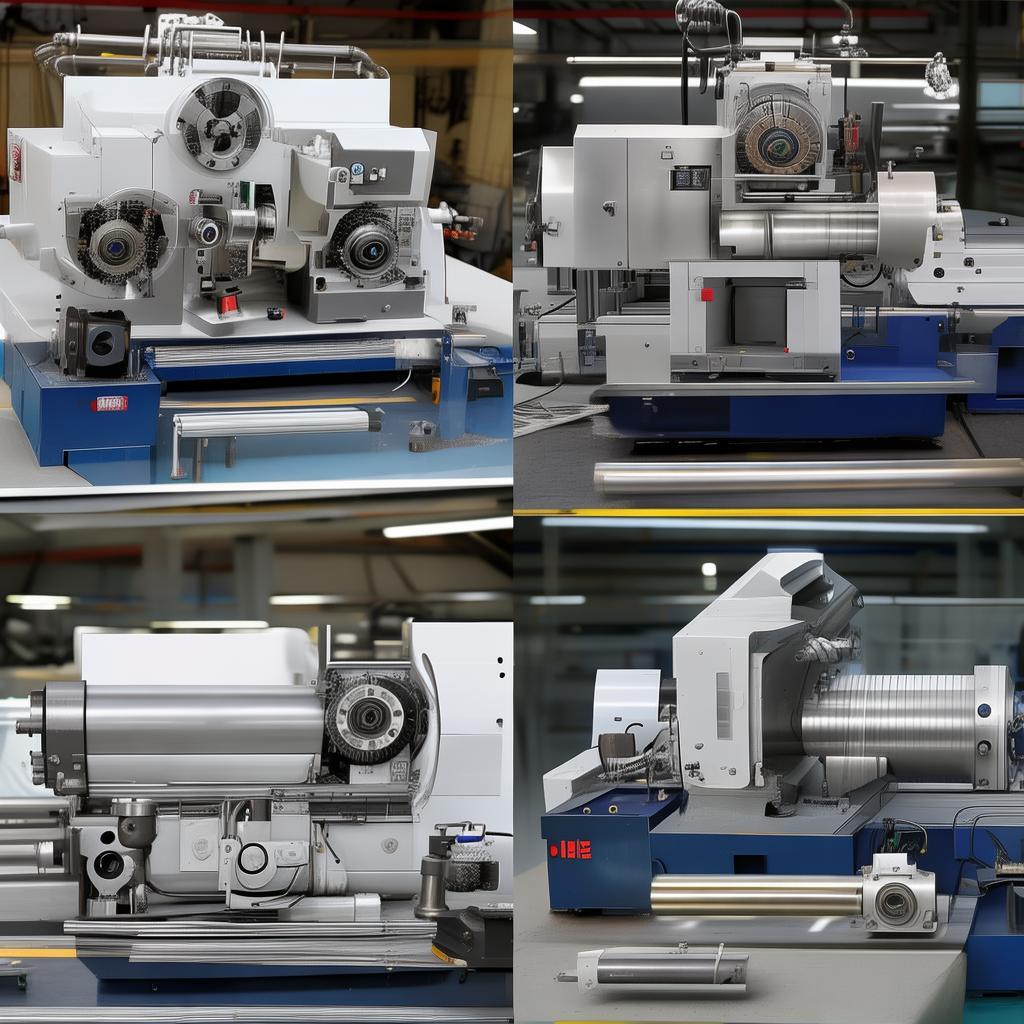
CNC lathe for custom parts
Product Overview
A CNC lathe for custom parts is a precision machining center engineered for turning operations on a wide range of workpieces—from shaft components and bushings to threaded fittings and complex cylindrical profiles. In the industrial manufacturing sector, where quality, repeatability, and delivery reliability directly impact downstream assemblies, this CNC turning solution helps manufacturers produce custom parts to print with stable geometry and controlled surface finish. Whether you need prototypes, low-to-mid volume production runs, or scaled output, a lathe-based turning process supports dimensional accuracy, process efficiency, and consistent part-to-part results.
Built for engineering teams, job shops, and OEM suppliers, our turning platform supports custom manufacturing workflows where documentation, traceability, and workmanship matter—helping you reduce iteration cycles and keep procurement schedules on track.
Key Features
- Turned-to-print consistency: Maintains stable machining practices to help deliver repeatable diameters, concentricity, and profile features across batches.
- Flexible custom production: Suitable for variable part geometries—ideal for engineering changes, customer-specific designs, and mixed-job scheduling.
- Efficient setup and production flow: Streamlined turning operations reduce non-cutting time so you can improve throughput for production lots and reorders.
- Stable surface finishing: Supports controlled cutting strategies to achieve consistent surface quality that reduces downstream fitting issues.
- Threading and feature machining support: Designed to handle threaded features and stepped profiles commonly found in industrial assemblies.
- Manufacturing documentation readiness: Supports engineer-friendly processes with part verification focus for transparent quality control.
- Process planning for cost control: Helps balance machining time, tool life planning, and material efficiency to reduce the total cost per part.
Technical Specifications
| Parameter | Specification |
|---|---|
| Workpiece turning capability (max diameter / max length) | Configurable by machine setup (please request exact range for your part drawings) |
| Spindle speed range | Configurable based on material and tooling plan |
| Number of tool positions (turret capability) | Designed for efficient multi-feature turning; exact configuration varies by application |
| Typical operations | Turning, facing, grooving, drilling support (as configured), threading, and stepped profile machining |
| Material compatibility | Common industrial alloys and steels (confirm specific grades for best machining guidance) |
| Quality verification approach | Dimensional inspection aligned to drawing requirements and critical features |
| Control system / programming | CNC programming workflow for custom machining; supports engineer-provided process inputs |
Note: To avoid misalignment with your exact drawing needs, key envelope metrics are offered as configurable ranges. Share your part dimensions and material grade to confirm the best CNC turning setup for your project.
Application Scenarios
- Automotive supply components: Turning custom shafts and bushings with consistent geometry for assembly fit.
- Industrial fluid handling: Machining threaded fittings and stepped adapters designed for reliable sealing and interchangeability.
- Robotics and motion systems: Producing precision cylindrical parts that support repeatable motion and predictable wear.
- General machinery and tooling: Manufacturing custom spindles, spacers, and ring components for maintenance and upgrades.
Advantages
Compared with generic turning options, this CNC turning approach is optimized for custom part workflows: your engineering intent is translated into machining steps that keep critical features stable across production. Instead of relying on trial-and-error setups, the process is planned around material behavior, tooling strategy, and verification points—helping you reduce rework and improve schedule confidence.
- Better fit for mixed requirements: Handles varied part geometries that are common in procurement-driven custom manufacturing.
- Repeatability for reorders: Supports consistent outputs when customers require long-term sourcing continuity.
- Reduced engineering iteration: Turning-to-drawing practices streamline prototype development and change control.
- Measured quality focus: Verification aligned to your drawing critical dimensions helps lower the risk of downstream assembly failures.
Why Choose Us
We serve international buyers who need dependable machining outcomes for custom industrial parts. Our team coordinates quoting, process planning, production scheduling, and inspection steps with a supplier mindset focused on clarity and accountability.
- Procurement-ready communication: Clear lead-time guidance and responsiveness during quoting and revisions.
- Engineering-first approach: We align machining capability to your part drawings, material requirements, and critical tolerances.
- Quality-minded production: Inspection practices focused on critical features to support reliable assembly performance.
- Scalable fulfillment: Suitable for both prototype planning and production replenishment schedules.
If you need specific compliance documentation for your industry, share your buyer requirements and we will confirm what can be supported for your CNC turning program.
FAQ
Q: What industries do you support with a CNC lathe for custom parts?
A: We support industrial manufacturing applications such as automotive supply chains, fluid handling components, robotics/mechatronics parts, and general machinery assemblies.
Q: Can you produce parts from our drawings and material grade?
A: Yes. Provide your engineering drawings (including critical dimensions and surface requirements) and specify the material grade so we can plan tooling and verification accordingly.
Q: How do you handle tolerance and inspection for custom CNC turning jobs?
A: We focus inspection on drawing requirements and critical features that affect fit, function, and assembly reliability.
Q: What lead time should we expect for a first article?
A: Lead time depends on part complexity, material availability, and verification needs. Share your part geometry and quantity; we will provide a schedule estimate for your CNC lathe for custom parts program.
Q: Do you support reorders and consistency across production runs?
A: Yes. Once the machining process and verification approach are aligned with your specifications, reorders can be produced with consistent process planning for stable outcomes in ongoing supply.
Ready to quote your next turned component? Send your drawings, quantities, and material specifications—we’ll review feasibility and propose the best machining approach for your CNC lathe for custom parts needs, including lead time and a clear path to production.
Prefer to start with requirements instead of a full drawing? Contact us with your target dimensions and function, and we’ll advise on the turning plan that fits your custom manufacturing goals.