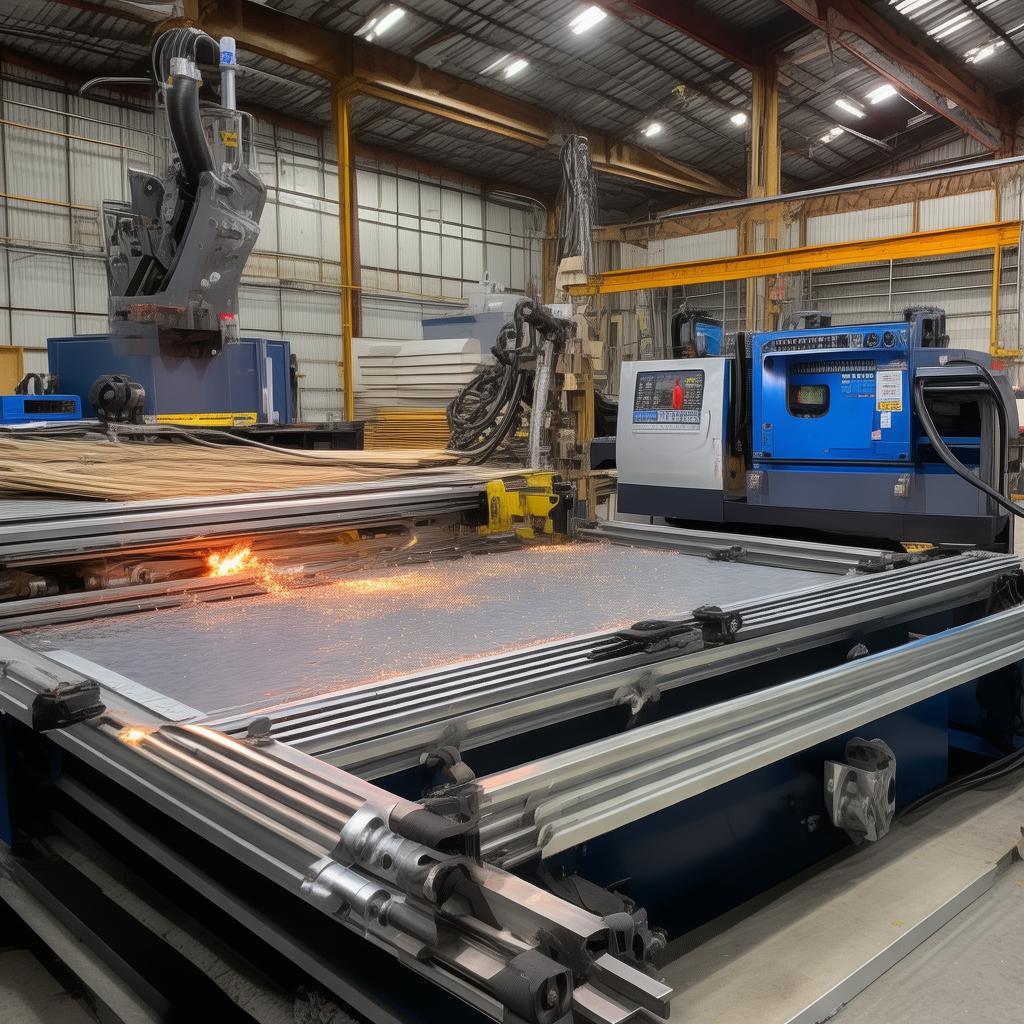
CNC lathe for job shops
Product Overview
A CNC lathe for job shops is a precision turning machine built for quick setup, stable machining, and repeatable results across short production runs. In the manufacturing and machining sector—where engineers and buyers demand flexibility without sacrificing tolerances—this type of lathe supports economical processing of shafts, bushings, threaded components, and custom metal parts. From prototyping to recurring contract work, a job-shop CNC turning center helps reduce scrap, streamline operator workflows, and deliver consistent finishes that meet customer specifications.
Key Features
- Fast changeovers for contract work: Designed to support efficient part-to-part transitions, helping you quote and schedule more jobs with confidence.
- Stable cutting for consistent tolerances: Rigid construction and controlled motion reduce chatter and improve dimensional repeatability.
- Smarter programming workflow: CNC control options support straightforward toolpath planning for typical job-shop geometries (turning, facing, threading, and boring).
- Improved surface quality: Reliable feed control and predictable cutting behavior help you maintain a clean finish for functional and cosmetic requirements.
- Flexible tooling & part handling: Supports a range of turning operations that fit common job-shop part families—reducing the need for multiple dedicated machines.
- Built for productive daily use: Operator-friendly design helps minimize downtime and makes routine production more manageable.
- Cost-effective machining capacity: Helps you run profitable small batches by balancing accuracy, throughput, and tooling efficiency.
Technical Specifications
| Parameter | Specification |
|---|---|
| Machine type | CNC turning lathe for contract machining and multi-part production |
| Control | CNC system configured for turning operations (facing, OD/ID turning, threading) |
| Spindle drive | Precision spindle motor with tuned speed control for stable machining |
| Workholding approach | Common job-shop chucking options (customer tooling and capacity selection) |
| Tooling | Configurable tool station(s) to support typical turning toolpaths |
| Cooling / lubrication | Integrated coolant delivery system for machining stability |
| Accuracy basis | Built for repeatable production tolerances when set up and operated per procedures |
| Typical workloads | Shafts, hubs, bushings, threaded components, custom turned parts |
Note: Specific capacity, spindle speed range, travel, and motor power vary by configuration. We can confirm exact figures based on your part sizes and required tolerances.
Application Scenarios
- High-mix production runs: Turn multiple customer part numbers in rotation without investing in dedicated setups for each geometry.
- Threaded components and shafts: Produce consistent thread profiles and straightness requirements for mechanical assemblies and replacements.
- Prototype-to-production transitions: Reuse tooling and machining strategies from early builds to establish repeatable manufacturing for follow-on orders.
- Repair and custom machining: Support on-demand machining for legacy parts where cycle time and quality stability matter to customers.
Advantages
Compared with generic workshop lathes or basic CNC units, this CNC turning solution is optimized for the realities of contract manufacturing: frequent job changes, varying material grades, and the need for repeatable results across different part families. The result is a more reliable machining workflow—less rework, fewer “trial runs,” and smoother coordination between engineering instructions, programming, and shop-floor execution. If you’re equipping a facility for a wide range of turned parts, a CNC lathe for job shops approach typically delivers better utilization than a one-application-only machine.
Why Choose Us
We support international trade and manufacturing buyers with a procurement-first mindset. Our team focuses on helping you select the right configuration for your turned-part portfolio, clarify options before purchase, and coordinate practical documentation for installation and commissioning. You can expect clear communication throughout the quoting and delivery process, plus responsive after-sales support planning to protect your production schedule.
- Transparent guidance on configuration for OD/ID turning, threading needs, and job-shop workflows
- Documentation-oriented delivery planning for smooth receiving and setup
- Support for part/fixture/tooling considerations so you can start producing sooner
- Ongoing communication to help maintain uptime and reduce planning risk
FAQ
1) Is this CNC lathe suitable for short-run, high-mix work?
Yes. It is intended for contract machining conditions where you switch between jobs frequently and need stable, repeatable turning results—hallmarks of the CNC lathe for job shops use case.
2) What parts can we run on this turning machine?
Typical applications include shafts, bushings, hubs, stepped components, and threaded parts. Exact capacity and tooling suitability depend on your dimensions and workholding strategy.
3) Will setup time be a concern when we receive new orders?
Setup efficiency is a key design expectation for job-shop operations. We can help you plan tooling and workflow so new jobs can start faster with fewer interruptions.
4) Do you support configuration for threading and internal machining needs?
Yes. Your requirements for threading, boring, and other turning operations influence the recommended configuration, tooling approach, and process planning.
5) How do we determine the right model size for our work?
Share your largest part diameter/length, material types, target tolerances, and annual volume range. We’ll align the turning capacity and tooling plan so your CNC lathe for job shops investment fits real production requirements.
Ready to evaluate a CNC turning option for your contract machining workload? Send your part drawings, typical material grades, and target tolerances, and we’ll recommend the most practical configuration and provide a quotation tailored to your production needs for your shop.
If you prefer, tell us your current machine constraints—this helps us position the right fit for job-shop throughput and quality expectations.