
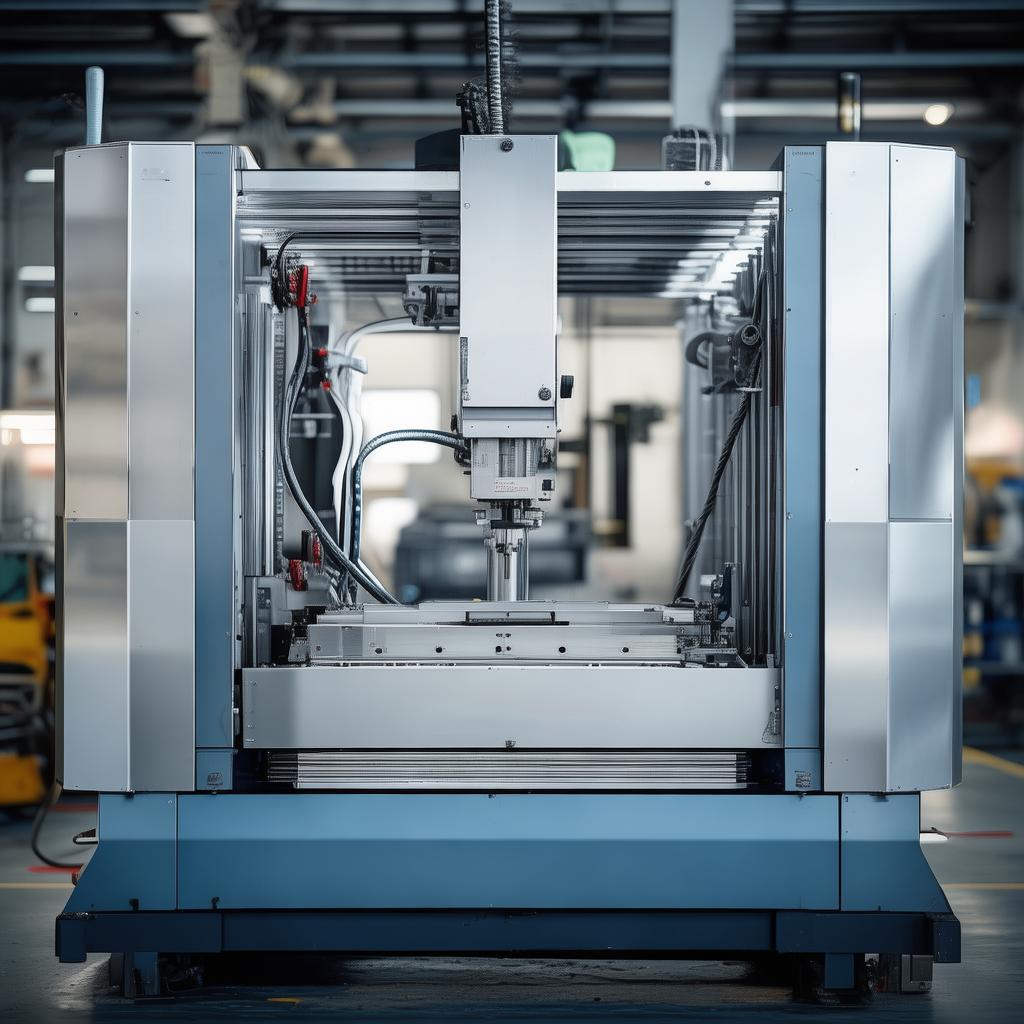
CNC machining center retrofitting
Product Overview
CNC machining center retrofitting is an industrial modernization service for existing CNC machine tools—upgrading controls, drives, spindle interfaces, and safety systems to restore precision and improve productivity without replacing the entire machine. This solution is widely used in metalworking, fabrication, and manufacturing environments where downtime costs are high and equipment utilization directly impacts throughput. For plants producing precision parts—such as shafts, housings, and tooling components—an upgrade program helps align legacy platforms with current production requirements while extending service life.
Key Features
- Lower total cost of ownership: Upgrade critical subsystems instead of purchasing a new center, helping reduce capital expenditure.
- Production-ready reliability: Replace aging electronics and mechanical wear-critical components to reduce unexpected stops and maintenance overhead.
- Improved motion control and repeatability: Modernize control/drive logic to better support consistent machining performance across production runs.
- Faster setup and programming workflows: Integrate updated interfaces and tooling workflows to shorten changeover time.
- Safety and compliance alignment: Upgrade guarding, interlocks, and safety components to match current shop-floor practices.
- Future-proofing for scalability: Prepare the machine for expanded automation, sensors, or connectivity needs as production evolves.
- Structured retrofit planning: A phased approach supports scheduling constraints and minimizes downtime during installation and commissioning.
Technical Specifications
Specifications vary by machine model, axis configuration, and target tooling/application. Below is a typical retrofit envelope used for planning.
| Parameter | Specification |
|---|---|
| Machine compatibility | Most legacy CNC machining centers with serviceable mechanical structure and available mounting interfaces |
| Axis scope | 2–5 axes dependent on original kinematics; optional auxiliary/sensing integration based on requirements |
| Control & interfaces | Modern CNC control electronics with fit-for-purpose I/O, spindle interface, and operator HMI upgrade options |
| Drives & feedback | Regeneration/drive subsystem refresh with updated feedback compatibility to improve stability and repeatability |
| Electrical integration | Cabinet wiring modernization, power conditioning where applicable, and documented signal mapping for maintainability |
| Safety upgrade package | Interlock and safety PLC/circuit integration aligned to the machine’s configuration and shop practices |
| Commissioning & validation | Electrical checkout, motion tuning, dry/part-cycle verification, and operator handover documentation |
Application Scenarios
- High-mix job shops: Modern interfaces and control workflows reduce setup friction for small batches and tooling variations.
- Automotive and tier suppliers: Upgraded motion control supports consistent machining of housings and components where scrap costs are high.
- General fabrication & subcontracting: Reviving legacy machining centers improves throughput without large-scale capex.
- Maintenance-driven refresh cycles: When electronics become obsolete, a structured retrofitting plan restores serviceability and parts availability.
- Automation-ready modernization: When adding fixtures, tool setters, or sensing, an upgrade prepares the control and I/O foundation.
Advantages
Compared with generic upgrades or ad-hoc electrical fixes, a dedicated modernization program delivers a more predictable result: the upgrade scope is mapped to the machine’s kinematics, wiring realities, and production goals. Instead of patching symptoms, our approach prioritizes system-level stability—control logic, drive behavior, signal integrity, and commissioning validation—so the upgraded center performs consistently under real machining conditions. If you are evaluating CNC machining center retrofitting versus purchasing a replacement, consider that targeted refurbishment often preserves useful mechanical assets while eliminating the biggest sources of downtime and maintenance drag.
Generic alternatives may focus only on one component (such as swapping a controller) while leaving interface mismatches, incomplete safety integration, or insufficient tuning for your production profiles. With CNC machining center retrofitting planning that respects your workflow, we support smoother integration, clearer documentation, and faster ramp-up after installation.
Why Choose Us
- Process-driven retrofit execution: Defined discovery, scope confirmation, installation, and commissioning steps to reduce surprises.
- Engineering focus, not just hardware: We coordinate electrical integration and motion tuning with your production objectives.
- Documentation for long-term maintainability: Wiring and configuration mapping support troubleshooting and future service.
- Support for international operations: Practical planning for shipping constraints, site access, and production scheduling.
- Collaborative commissioning: Validation with your team to ensure stable operation and effective operator handover.
Note: Specific certifications and performance figures are provided only when they are available and confirmed for your project scope.
FAQ
1) What information do you need to quote a CNC machining center retrofitting project?
We typically request the machine model, axis configuration, control brand/version (if applicable), photos of the electrical cabinet, spindle/motion components (as available), and your target applications (materials, part types, and tolerance expectations).
2) Will retrofitting affect my existing programs and tooling workflow?
It depends on the control platform and interface changes. We plan for a smooth transition by mapping I/O, spindle/encoder compatibility, and operator workflow so your ramp-up is predictable.
3) How long will the downtime take during installation and commissioning?
Timeline varies by scope (control only vs. full drive/safety refresh) and site readiness. We align the installation sequence to minimize disruption and confirm the plan during scoping.
4) Is CNC machining center retrofitting suitable if my machine is older?
Many older centers are excellent candidates when the mechanical foundation is sound. The retrofit proposal is based on feasibility of interfaces, parts availability for critical subsystems, and the condition of motion components.
5) Can you upgrade for automation readiness (tooling, sensing, or connectivity)?
Yes. Retrofitting can include additional I/O, interface layers, and commissioning support so the machine is prepared for automation expansion.
If you’re evaluating options to restore productivity or extend the life of your machining fleet, tell us your machine details and production targets—then we can propose a scope for CNC machining center retrofitting that fits your schedule and budget. Request a quotation or send us your specifications for a feasibility review.