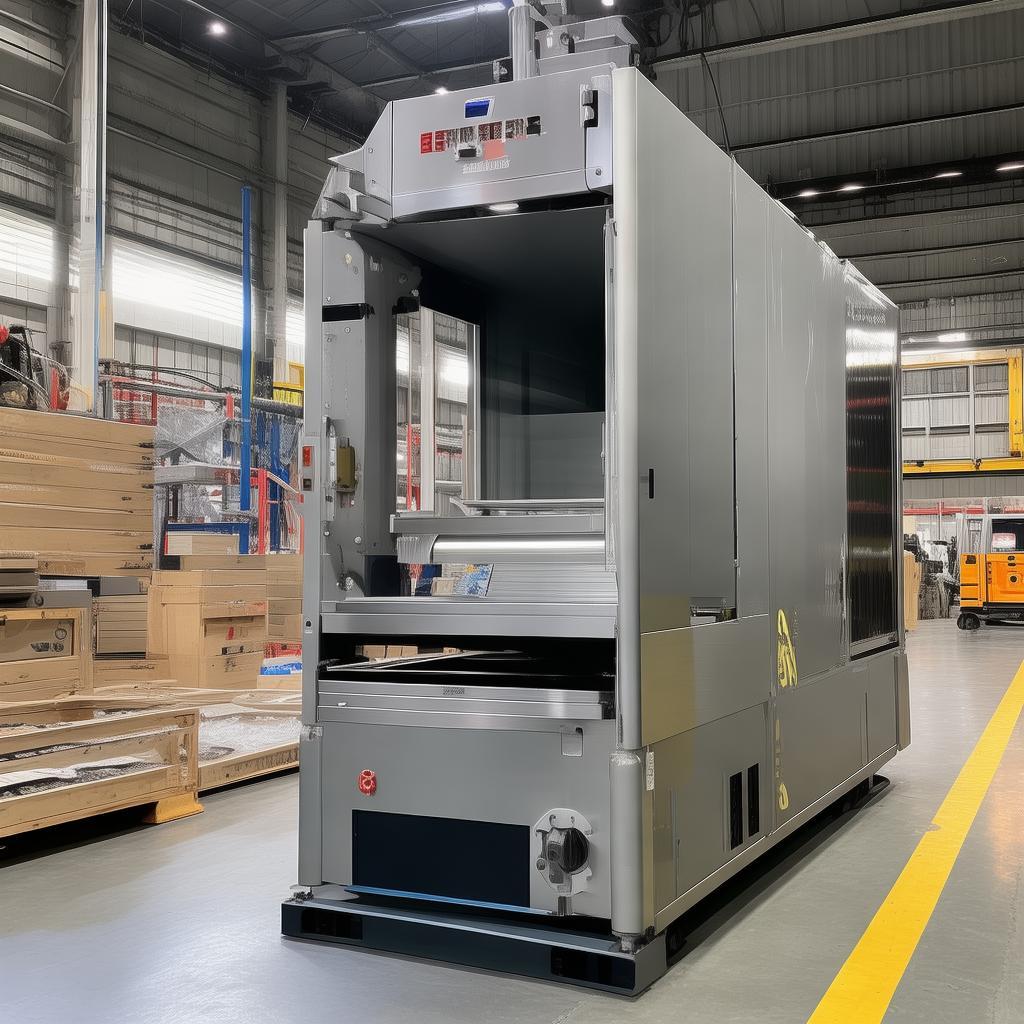
horizontal CNC machining center
Product Overview
A horizontal CNC machining center is engineered for high-productivity machining where workpieces benefit from horizontal setup and stable chip evacuation. In manufacturing environments—especially industrial parts production for automotive suppliers, machinery builders, and metal fabrication—this type of CNC platform supports milling, drilling, boring, and complex multi-surface machining in one setup. By combining rigid clamping, efficient workholding, and controlled tool motion, a horizontal machining center helps teams reduce rework, shorten cycle times, and improve dimensional consistency across repeat production lots.
Key Features
- Stable horizontal work positioning to improve surface finish and consistency on large or complex parts, supporting reliable tolerances during batch runs.
- Efficient chip management that reduces recutting and helps maintain tool life in high-removal applications—an operational priority for production shops.
- Flexible multi-operation capability for milling, drilling, and boring in fewer setups, lowering handling time and avoiding alignment errors between machines.
- Rigid cutting performance designed for metal removal, enabling productive machining of common industrial alloys and workpiece geometries.
- Tool change and automation readiness to support unattended or semi-unattended operation, increasing throughput for multi-shift production planning.
- Process repeatability that supports consistent part-to-part results, improving quality control efficiency for procurement and quality teams.
- Operator-friendly integration with practical maintenance access and straightforward workflow for training, day-to-day reliability, and service response.
Technical Specifications
| Parameter | Specification |
|---|---|
| Machine type | Horizontal CNC machining center for industrial production |
| Axes / control | Multi-axis CNC control configuration (configured per project) |
| Spindle configuration | High-rigidity spindle assembly (model-dependent) |
| Workholding interface | Compatible with standard industrial fixtures and pallet/workpiece systems |
| Tooling / turret or magazine | Tool changer and tool storage options (selected during configuration) |
| Cooling / lubrication | Integrated coolant delivery and lubrication system (project-specific) |
| Chip handling | Designed for continuous machining with effective chip evacuation |
| Accuracy & repeatability | Measured performance to be confirmed with supplied documentation |
Note: Exact configuration (travel, spindle speed range, tooling, and automation options) is selected based on your part geometry and production targets. We can provide a final specification sheet after quoting.
Application Scenarios
- Automotive supplier components: machining multiple surfaces and features on gearbox housings, brackets, and structural parts with reduced handling between operations.
- Industrial machine parts: milling, drilling, and boring of cast or welded assemblies where rigidity and stable clamping improve finish and tolerance control.
- Metal fabrication and sub-assembly production: efficient bulk machining for repeat orders, supporting standardized fixturing and consistent outputs.
- Hydraulic and powertrain assemblies: producing complex plate and housing features that benefit from horizontal setup and clean chip evacuation.
Advantages
Compared with generic CNC milling solutions, an industrial horizontal platform is typically chosen when production teams want stronger support for setup stability, chip flow management, and multi-surface machining in one workflow. This improves overall process control—especially for parts with deep pockets, multiple mounting faces, or heavy finishing requirements.
- Better suitability for complex parts where horizontal orientation improves fixturing stability and reduces re-alignment risk.
- Higher throughput potential by consolidating operations and supporting automation-ready tool management.
- More predictable machining behavior for production runs due to rigid structural design and consistent part referencing.
- Reduced scrap and rework risk through fewer setups and improved repeatability across batches.
Why Choose Us
We support buyers and integrators with practical, procurement-friendly guidance—from initial part review to machine configuration planning and after-delivery support. Our team focuses on helping you select the right horizontal machining layout for your workload rather than offering a one-size-fits-all proposal.
- Clear communication on configuration options, tooling paths, and integration needs.
- Documentation and transparent quotation scope aligned to your manufacturing requirements.
- Service and spare parts planning designed to minimize downtime and support continuity.
- Training-oriented handover to help operators and maintenance teams ramp up efficiently.
FAQ
Q1: What kinds of parts are best suited for a horizontal CNC machining center?
Parts that require multiple machining faces, stable fixturing, and efficient chip evacuation—such as housings, brackets, and industrial components—typically benefit most from horizontal orientation.
Q2: Can this type of horizontal machining center handle both roughing and finishing?
Yes. The machine is designed for production workflows that include roughing and finishing operations, with tooling and process planning configured to your material and feature requirements.
Q3: How do I choose the right configuration for my application?
Share your part drawings, material, annual volume, and target tolerances. We’ll recommend axis configuration, workholding approach, tooling setup, and automation options to match your throughput goals.
Q4: Is automation supported for higher-volume production?
The platform supports tool management and can be configured for practical automation pathways based on your production model, including fixture strategy and changeover needs.
Q5: Do you provide documentation and support after delivery?
Yes—our process includes handover support and planning for maintenance readiness. Final details depend on the quoted package.
If you’re evaluating a new production line or replacing underperforming capacity, send us your part requirements and target output. We’ll help you match the right horizontal machining setup and provide a quotation tailored to your workflow.
Ready to standardize your process? Tell us the materials and geometries you machine most often—we’ll review whether this horizontal CNC machining center approach fits your throughput and quality targets.