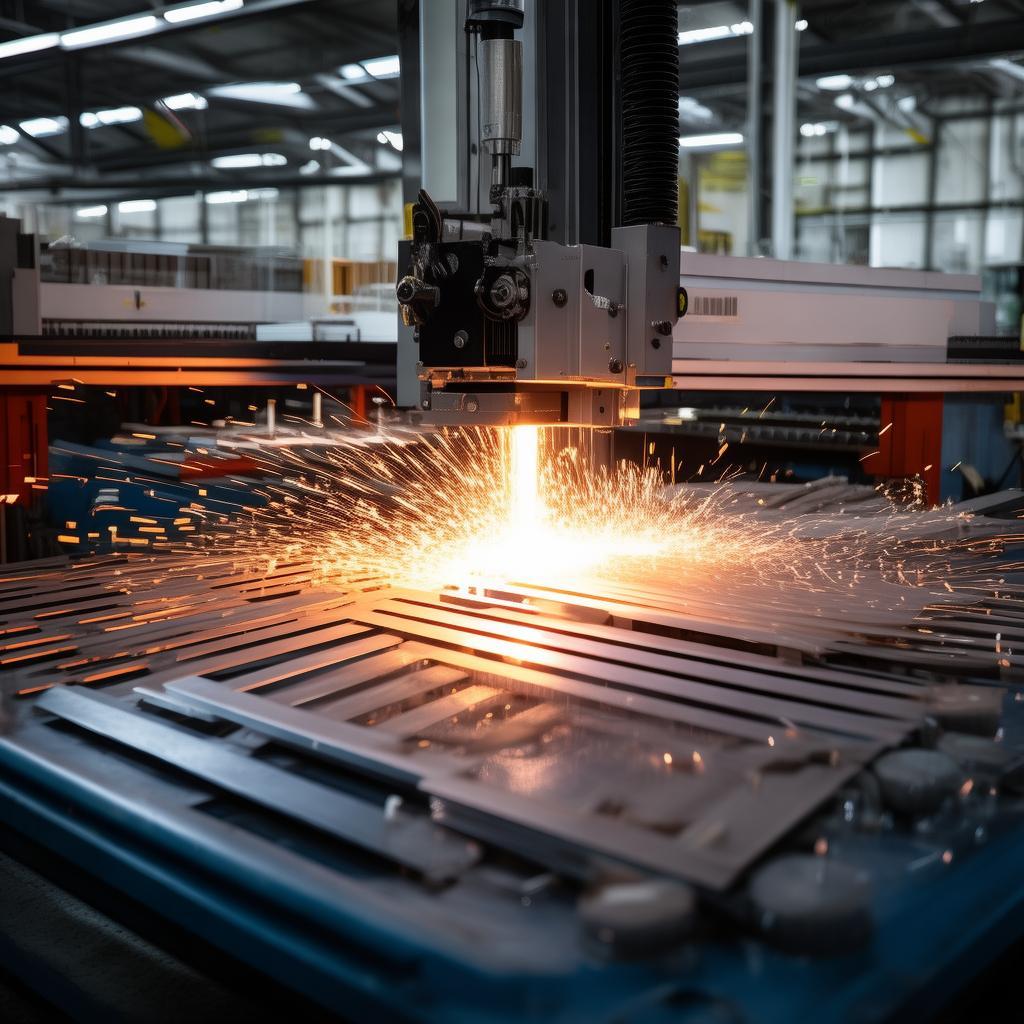
CNC plasma cutting for industrial fabrication
Product Overview
CNC plasma cutting for industrial fabrication is a production-focused cutting solution designed for precision, speed, and repeatability when manufacturing metal parts at scale. In industrial fabrication environments—where uptime, consistency, and dimensional accuracy drive cost per part—CNC-controlled plasma cutting helps automate contour cutting for everything from structural components to engineered assemblies. By translating CAD/CAM toolpaths into controlled torch motion, this system reduces manual rework, supports tighter tolerances, and improves throughput for procurement teams managing multi-part projects.
Whether you’re a job shop, fabricator, or an integration partner supporting industrial supply chains, the value of CNC plasma lies in predictable results, configurable production workflows, and compatibility with modern manufacturing documentation—from drawings and nesting strategies to revision-controlled part files.
Key Features
- CAD-to-cut repeatability: Convert engineering designs into repeatable toolpaths to maintain consistent part quality across production runs.
- Efficient nesting for material savings: Improve raw material utilization by optimizing layout strategies for batches and mixed orders.
- Stable production workflow: Reduce dependency on manual operator technique, helping standardize output for procurement schedules.
- Rapid setup and job changeovers: Support faster transitions between part families—useful for quoting and fulfilling varied fabrication orders.
- Clean, workable edges: Achieve cut surfaces suitable for subsequent forming, welding preparation, and assembly operations.
- Engineering-friendly documentation: Maintain traceable CAM definitions so revisions can be managed with fewer production surprises.
- Scalable for industrial demand: Designed for fabrication throughput where consistent output quality matters to downstream operations.
Technical Specifications
| Parameter | Specification |
|---|---|
| Cutting method | CNC plasma torch cutting for industrial fabrication |
| Control workflow | CAM-based program execution from engineered part files |
| Recommended use | Production fabrication: plate contours, structural components, and assemblies |
| Typical material targets | Carbon steel and other ferrous plate materials (configuration-dependent) |
| Programming deliverables | Nesting and toolpath definitions aligned to drawings and revision control |
| Production orientation | Batch cutting and repeat runs with standardized settings |
| Integration support | Works with established fabrication processes (welding prep, forming, assembly) |
Application Scenarios
- Structural steel fabrication: automate cutting of beams, brackets, and gusset plates for faster, consistent assembly.
- Industrial equipment enclosures: produce repeatable sheet components for housings, frames, and access panels.
- Trailer and transport frames: cut multiple plate elements from engineered drawings to streamline downstream welding.
- Machine base components: support batch fabrication of machine-structure parts where alignment and process repeatability matter.
Advantages
This approach to CNC plasma cutting for industrial fabrication outperforms generic cutting alternatives by focusing on production control—transforming design files into consistent output rather than relying on manual technique. Compared with purely manual plasma cutting or one-off setups, CNC-driven workflows improve repeatability, shorten job changeover cycles, and make it easier to manage revisions across active orders.
For procurement and engineering teams, that means fewer surprises in manufacturing schedules, more predictable part readiness for welding and assembly, and tighter alignment between drawings, CAM toolpaths, and shop-floor output. In short, you gain a scalable process that supports stable throughput for industrial fabrication programs.
Why Choose Us
We support industrial fabrication customers with a procurement-ready mindset: clear communication, process documentation, and practical guidance to help your team reach production goals. Our focus is on reducing risk—through thoughtful quoting, accurate file readiness checks, and responsive coordination for project timelines.
- Reliable project coordination: We align on requirements early so production planning is smooth.
- Process transparency: We can discuss how cutting workflows connect to your downstream steps (welding prep, fit-up, assembly).
- File and revision readiness support: Helps minimize rework caused by toolpath mismatch or drawing changes.
- International trade capability: Suitable for cross-border sourcing and distributor programs that require dependable lead-time communication.
FAQ
Q1: What file formats and workflows can we use for CNC plasma cutting for industrial fabrication?
A: We typically work from CAD/CAM-ready part definitions provided in the format your team already uses, then align settings and nesting logic to your drawings and revision history.
Q2: How do you help reduce rework for industrial fabrication projects?
A: We support early requirements review, toolpath readiness checks, and a workflow that connects cut output to welding/assembly needs—so parts arrive closer to final fit-up expectations.
Q3: Is this suitable for both prototypes and production runs?
A: Yes. The same CNC-controlled process supports early validation and then scales to repeat runs, helping you maintain consistency as volumes increase.
Q4: What makes CNC plasma cutting different from manual plasma cutting for industrial fabrication?
A: CNC automation improves repeatability and standardization—reducing operator variability and enabling more efficient nesting and changeovers for fabrication schedules.
Q5: Can the solution integrate into our existing fabrication process?
A: The workflow is designed to fit within common downstream steps such as welding prep and assembly sequencing, so your shop can adopt it without disrupting established operations.
Ready to quote a production order or evaluate CNC plasma cutting for industrial fabrication for your next program? Share your material type, part drawings, and expected volumes—we’ll respond with a clear, procurement-friendly path to get your cut schedule moving.