
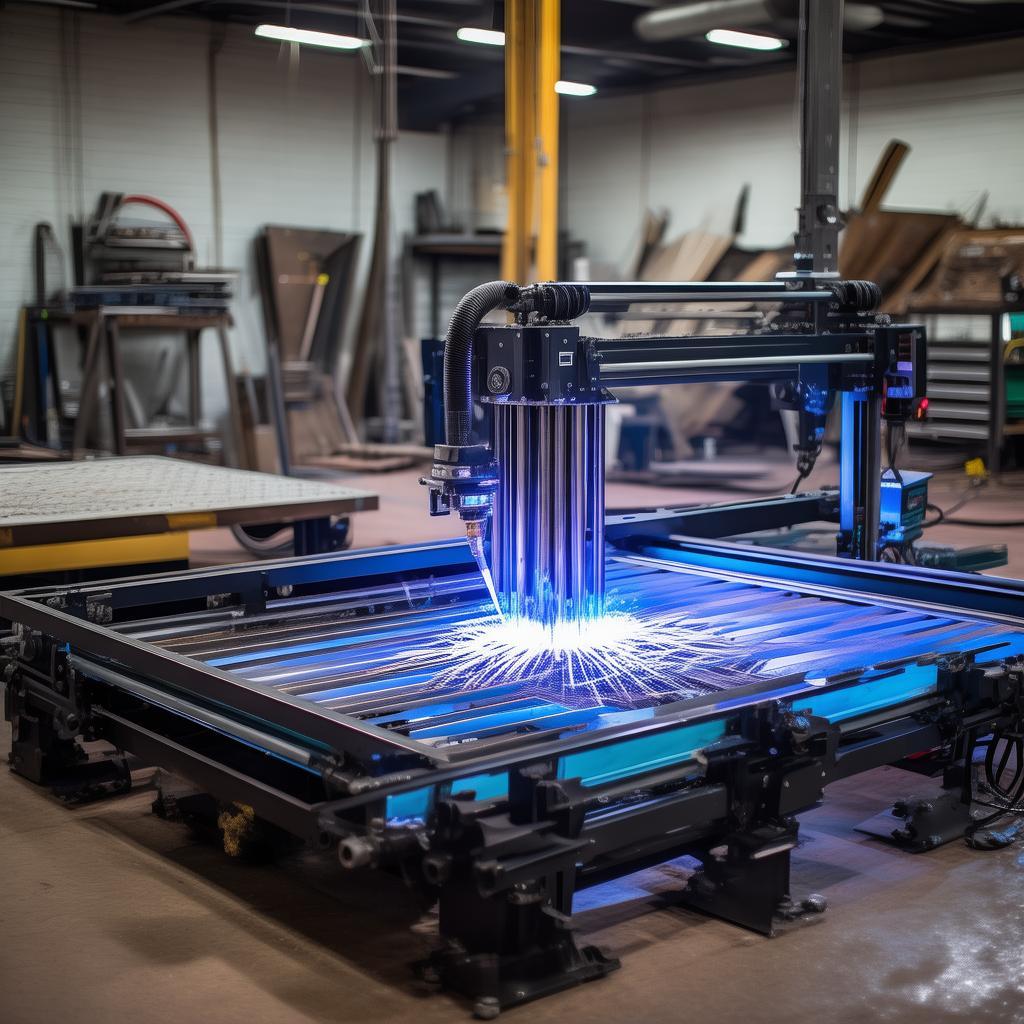
CNC router for foam and plastics
Product Overview – CNC router for foam and plastics for precise, repeatable cutting and shaping
A CNC router for foam and plastics is a computer-controlled cutting and machining system designed to carve, mill, route, and engrave light materials with clean edges and consistent dimensional accuracy. In the industrial manufacturing and packaging/insulation industries, these machines help teams convert CAD/CAM designs into production-ready parts—quickly, with less scrap, and at scale. This CNC router for foam and plastics workflow supports applications where geometry, surface finish, and repeatability matter, from custom inserts to protective packaging components.
Whether your operation focuses on prototypes or batch production, a router platform built for foams and polymer materials improves throughput while maintaining stable toolpaths and predictable results across runs.
Key Features
- Material-aware routing workflow to help you achieve clean cuts in common foam and plastic formulations while minimizing edge chipping and burring.
- Consistent repeatability for production runs so every part matches the programmed CAD geometry, reducing rework and dimensional drift.
- Efficient CAD/CAM integration for faster job setup and easier scaling from engineering prototypes to manufacturing lots.
- Rigid, stable machining platform designed to keep toolpaths predictable during longer cutting cycles.
- User-friendly operations that support day-to-day production use—ideal for distributors, production engineers, and in-house machining teams.
- Cleaner output and reduced manual finishing compared with non-CNC methods, improving consistency for packaging, insulation, and molded-like components.
Technical Specifications
| Parameter | Specification |
|---|---|
| Machine type | CNC router for foam & plastics routing, milling, engraving |
| Control & motion | Computer-controlled CNC axes with program-driven toolpaths |
| Repeatability focus | Designed for stable production geometry and consistent part-to-part results |
| Typical supported operations | 2D contouring, 3D surfacing routines, pocketing, engraving |
| Workholding approach | Compatibility with common vacuum/fixture strategies used for foams & polymer boards |
| CAD/CAM compatibility | Program-ready toolpaths from standard design workflows (format depends on configuration) |
| Intended material range | Foam (e.g., EPS/EPE variants, PU foams) and polymer plastics suitable for routing |
Note: For exact machine dimensions, spindle/tool options, and cutting speeds/feeds, please request a configuration quote based on your material thickness and part geometry.
Application Scenarios
- Protective packaging inserts: Produce custom foam and plastic cutouts that match product contours for safer shipping.
- Insulation and thermal lining panels: Route accurate shapes and recesses for HVAC, equipment enclosures, and industrial housings.
- Interior components and mockups: Build repeatable prototypes and production-ready parts from routed polymers and foams.
- Custom tooling blanks: Create lightweight fixtures, jigs, and support components using consistent CNC machining.
Advantages
Compared with generic cutting systems (manual routers, hot-wire cutters, or simple engraving machines), a dedicated CNC router for foam and plastics setup is built around stable toolpath execution and repeatable production geometry. That matters when you need tight tolerances for inserts, clean edges to reduce downstream finishing, and predictable part-to-part consistency.
For many manufacturers and packers, the biggest improvement is operational: faster job turnaround, easier scaling across SKUs, and fewer “make it work” adjustments during production because the design-to-part workflow is standardized from the start.
Why Choose Us
We support international trade and manufacturing teams with practical, procurement-ready solutions—focused on uptime, fit-for-purpose configuration, and reliable onboarding. If you’re sourcing equipment for a production line, you can expect transparent communication, documentation aligned to machine commissioning, and responsive after-sales support for your team.
- Configuration support based on your material type, thickness range, and part complexity.
- Straightforward guidance on CAD/CAM workflow and production job planning.
- Ongoing service availability for remote troubleshooting and upgrade planning.
- Clear packaging and logistics coordination for cross-border deliveries.
FAQ
1) What materials can this CNC router handle?
It’s intended for foam and plastics suitable for CNC routing—commonly used in packaging inserts, insulation panels, and polymer-based components. Exact suitability depends on your specific formulation and cutting strategy.
2) Will the machine produce clean edges without heavy rework?
When configured appropriately for your material thickness, tool selection, and toolpath strategy, the router output is designed to reduce chipping and surface defects compared with lower-control alternatives—helping lower finishing labor.
3) Do I need special CAD/CAM software to run jobs?
You’ll generate toolpaths from your existing design workflow, and the machine accepts production-ready CNC programs. We can help align your workflow to ensure smooth setup for each run.
4) Is a foam-and-plastics CNC router suitable for small batches or prototypes?
Yes. The value is strongest when you need design flexibility and repeatability across different SKUs—whether you’re ramping up prototypes or moving into consistent production.
5) How do I select the right configuration for my parts?
Share your material type, thickness, part dimensions, and target throughput. We’ll recommend an appropriate configuration for your production needs—so your CNC router for foam and plastics investment is sized correctly for your work.
If you want a production-ready proposal, send your part drawings (or CAD files), material specifications, and expected run size. We’ll help you confirm the right setup for your application and provide a quotation for the CNC router for foam and plastics solution that fits your manufacturing workflow.