
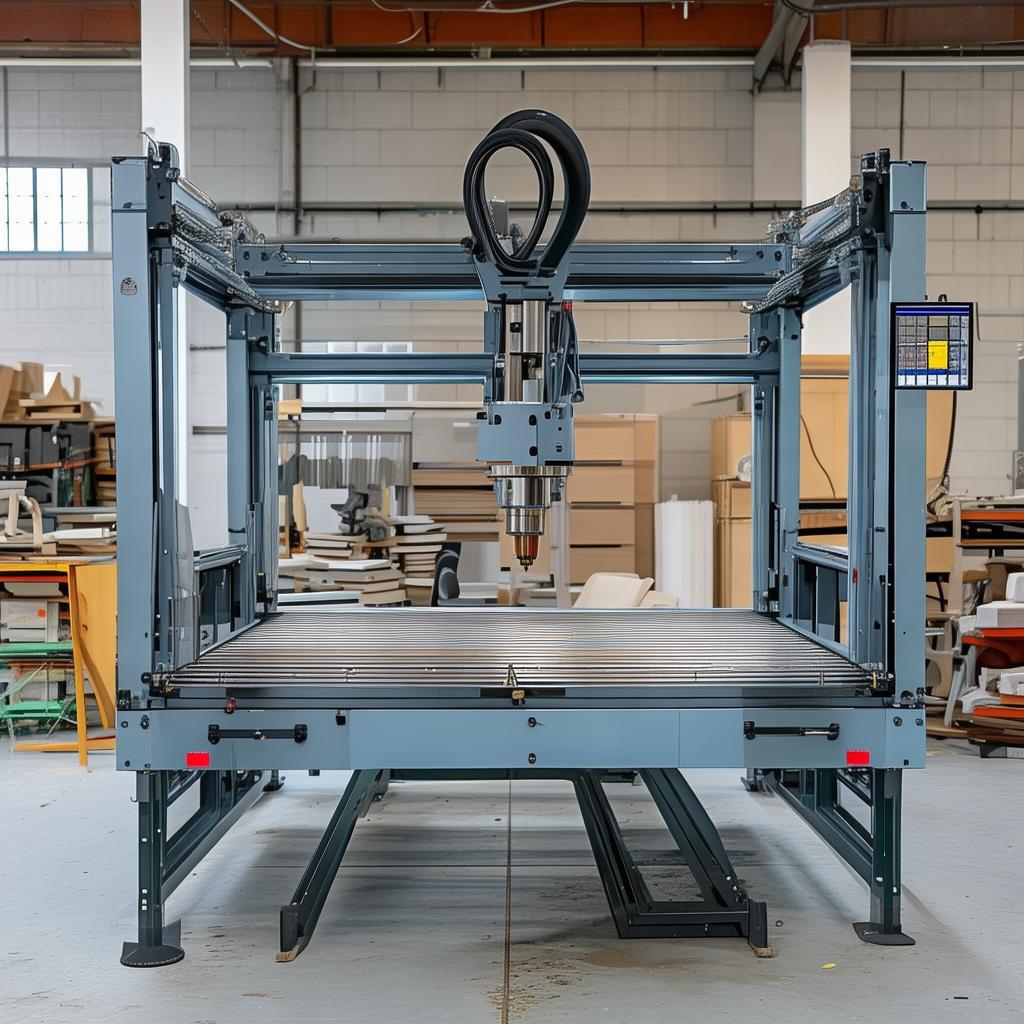
CNC router for industrial production
Product Overview
Designed for factories that need repeatable output, a CNC router for industrial production delivers automated machining of wood, composite, plastic, and light metals using a multi-axis control system. This category of CNC equipment is commonly specified by furniture manufacturers, cabinet and panel producers, signage and architectural fabrication shops, and engineering contractors who want consistent geometry across large production runs. With rigid construction, reliable tool control, and production-ready workflow integration, the CNC router for industrial production helps teams reduce manual handling, shorten lead times, and maintain stable tolerances from batch to batch.
Whether you’re cutting sheet materials, engraving components, or producing nested toolpaths for optimized throughput, industrial CNC routing is built to support daily use with predictable results—making it a practical investment for procurement teams focused on uptime, quality, and scalable capacity.
Key Features
- Production-grade rigidity for stable cutting and reduced vibration during long runs, helping maintain part quality.
- Industrial control workflow that supports repeatable programs, facilitating consistent output for series manufacturing.
- Efficient toolpath performance to improve cycle time and material utilization, supporting higher throughput per shift.
- Reliable spindles and drive components designed for daily operation, supporting predictable performance and reduced downtime.
- User-friendly setup for faster job changeovers—beneficial when production schedules shift frequently.
- Safety and operational stability features that align with factory floor expectations for continuous machining.
- Scalable manufacturing approach enabling upgrades or configuration adjustments as your product mix grows.
Technical Specifications
| Parameter | Specification |
|---|---|
| Machine type | CNC router for industrial panel and profile production |
| Axes configuration | Multi-axis CNC (configurable based on application) |
| Working area | Configured to match production sizes (quote-specific) |
| Spindle | High-speed industrial spindle (model selected during configuration) |
| Drive system | Precision motor and motion drives suitable for production routing |
| Controller | Industrial CNC control platform with standard job file workflow |
| Dust handling compatibility | Designed for shop-floor integration (routing applications) |
| Cooling / lubrication | Industrial-friendly protection and maintenance system |
| Power requirements | Varies by configuration and region (provided during quotation) |
Note: Exact working dimensions, spindle model, and power details depend on the configuration required for your material thickness, tool strategy, and production volumes.
Application Scenarios
- Furniture and cabinet panel cutting: nesting and repeatable routing for consistent dimensions across batches.
- Signage and architectural components: engraved text, routed profiles, and fast job turnover for varied designs.
- Composite and plastic fabrication: production runs where stable toolpaths help maintain surface finish and edges.
- Light metal or specialty machining (as configured): controlled routing for brackets, housings, and prototyping-to-production transition.
Advantages
Compared with generic hobby-leaning CNC routers or underspecified “entry” machines, a production-oriented CNC system is engineered to minimize variability. The result is a smoother path to stable throughput, lower scrap rates, and predictable maintenance cycles—key drivers for manufacturers and high-volume fabricators.
- More consistent motion and cutting stability for long production schedules.
- A control and workflow approach designed for repeatable jobs rather than one-off projects.
- Configuration flexibility to match material types, tooling, and table/workholding needs.
- Better alignment with factory operations such as dust management, shift work, and job changeover routines.
Why Choose Us
We support industrial buyers with a supply approach focused on practical deployment: correct configuration for your workpiece sizes, tool strategy expectations, and production cadence. Our team assists with selection guidance, documentation for procurement, and responsive communication during installation planning.
- Application-based configuration: we align machine setup with your materials and workflow.
- International readiness: packaging, shipping coordination, and export-friendly documentation support.
- After-sales support: guidance for setup, commissioning steps, and operational best practices.
- Procurement-friendly process: clear quoting, lead-time transparency, and configuration confirmation.
If you have specific requirements (material, spindle power needs, working area, or integration with existing production lines), share them and we’ll recommend the most suitable setup for your CNC routing production.
FAQ
1) What materials can this CNC router handle for industrial production?
It is commonly used for wood, engineered panels, composites, plastics, and—depending on the configuration—light metals. Share your material type and thickness so we can align spindle/tooling and workflow.
2) How do I choose the correct working area?
We recommend selecting a table/work envelope based on your largest part dimensions plus a practical margin for fixturing. For series production, matching typical panel sizes often improves nesting efficiency.
3) Will the machine support batch repeatability and job changeovers?
Yes. Industrial routing is designed for repeatable programming and consistent execution of toolpaths, helping teams reduce variation between batches.
4) What maintenance is required for a CNC router used daily?
Maintenance routines typically include keeping the motion system clean, following spindle care guidance, and inspecting wear items as part of your production schedule. We provide setup and operational best practices during onboarding.
5) Is this suitable for distributors integrating multiple machines?
For distribution and system integration, a production-ready CNC platform is a strong fit because it can be configured to different envelopes and material needs, making it easier to match customer requirements across regions.
Ready to evaluate the right configuration for your production line? Tell us your typical materials, part sizes, and monthly volume, and we’ll prepare a tailored quotation and deployment plan for your CNC routing operations—including a CNC router for industrial production setup that matches your throughput goals.