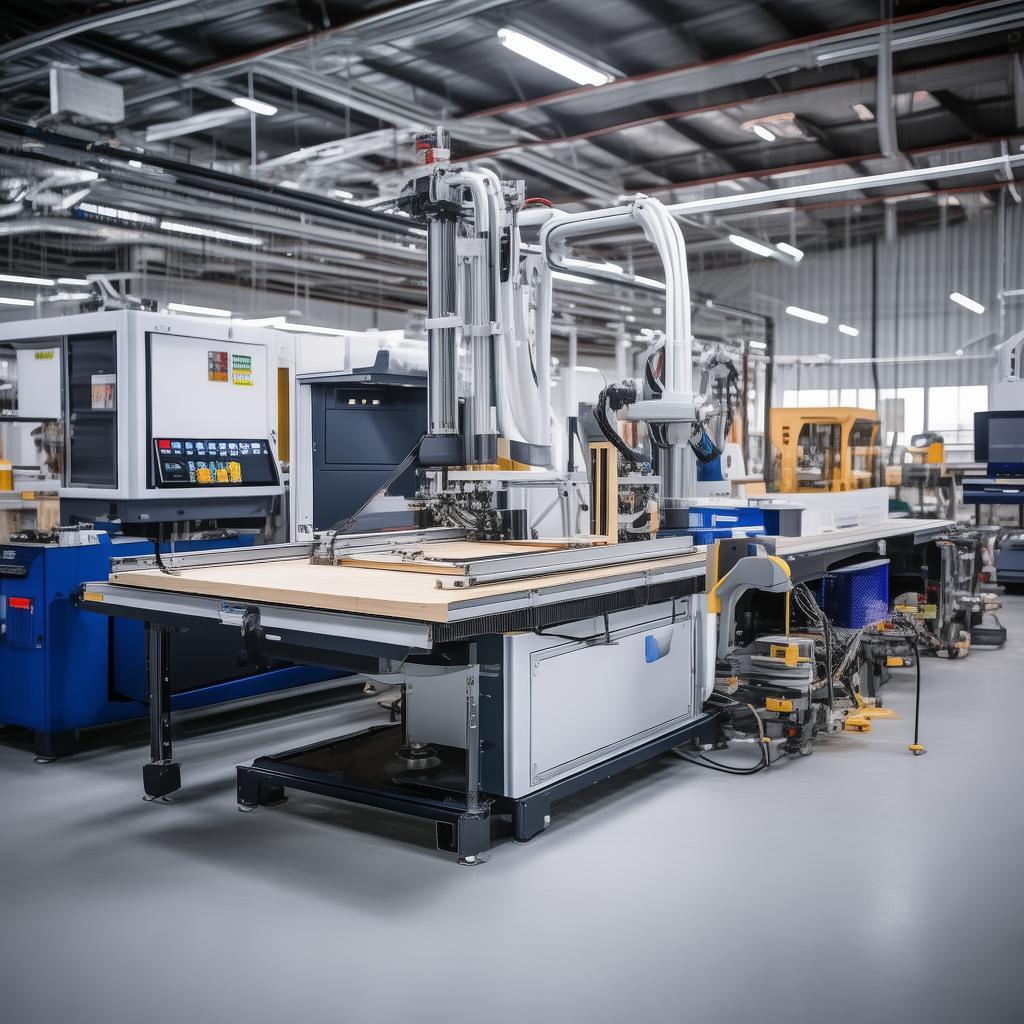
CNC router with ER collet spindle
CNC Router with ER Collet Spindle for Precision Machining in Wood, Plastics & Light Metal Work
A CNC router with ER collet spindle is a computer-controlled machining system designed to deliver stable, accurate cutting for production-ready workpieces across fabrication shops, panel processing, and small-to-mid batch manufacturing. In woodworking and sign-making environments, it’s valued for repeatable routing, clean edges, and smooth finish quality on patterned parts. In plastics and light metal applications, the ER collet interface supports secure tool holding—helping engineers maintain consistency when switching bits between jobs.
Key Features
- Confident tool holding with ER collets: Improves grip consistency for milling cutters and router bits, reducing runout risk during high-detail operations.
- Smooth finishing for repeatable parts: Stable spindle dynamics help maintain edge quality for signage, cabinetry components, and patterned profiles.
- Flexible tooling for job-shop workflows: Quick bit changes support short-run production, prototyping, and frequent customer-specific part revisions.
- Process stability for productivity: Designed for consistent routing and milling performance to help reduce rework and downtime on the shop floor.
- Clear setup for operators and engineers: Tool selection and collet-based clamping are straightforward, making it easier to standardize procedures across shifts.
- Supports both production and development: Ideal for repeatable CNC cutting while still accommodating design iterations in prototyping.
- Build suitable for daily manufacturing use: Built to withstand ongoing operation where uptime and dependable tool changes matter.
Technical Specifications
| Parameter | Specification |
|---|---|
| Spindle type | ER collet spindle (tool holding via ER collets) |
| Tool interface | ER collet chuck system for compatible cutter shanks |
| Typical materials | Wood, composite panels, plastics; suitable for light milling applications depending on setup |
| Cutting use | Routing, contouring, engraving, profile milling, pocketing |
| Workflow integration | CNC machining workflow using standard CAD/CAM outputs (model-dependent) |
| Operational focus | Stable toolholding and consistent routing performance for production environments |
| Spindle servicing approach | Maintenance and tool-interface inspection recommended per service schedule |
Note: Exact motor power, spindle speed range, travel dimensions, and control interfaces depend on the configured model. Share your material and part dimensions to receive the matching setup.
Application Scenarios
- Signage and decorative routing: Achieve clean lettering and consistent contours for repeatable brand kits.
- Cabinet and panel component machining: Route profiles and pockets with dependable tool holding for faster assembly-ready output.
- Plastic prototype and small-batch parts: Support accurate engraving and milling with reduced variability when swapping tooling.
- Aluminum/steel fixtures (light cuts): Use the ER collet spindle interface for secure cutter clamping during controlled material removal.
Advantages
Compared with generic router spindle setups, a system built around an ER collet chuck interface offers practical advantages for production and engineering teams:
- More consistent clamping for compatible shanks, helping reduce tool movement under load.
- Cleaner tool change workflow for multi-job schedules, especially where operators swap cutters frequently.
- Better alignment between tool selection and repeatability needs—important when customers expect tight, repeatable part geometry.
- A straightforward foundation for scaling output: process parameters can be standardized across material batches.
Why Choose Us
- B2B support mindset: We focus on practical procurement outcomes—fit to your materials, toollists, and production schedule.
- Transparent configuration guidance: We help you select the right collet and tooling approach to match your cutter shanks and part requirements.
- Serviceability and documentation: We provide documentation that supports installation planning and operator onboarding.
- International trade readiness: Procurement-friendly quoting, export coordination, and clear communication throughout the order cycle.
FAQ
Q1: What does “ER collet spindle” mean for day-to-day machining?
It refers to the tool-holding interface. With an ER collet system, cutters are clamped by a collet designed for the tool shank, supporting consistent grip and repeatability when running different jobs.
Q2: Can this CNC router with ER collet spindle handle both wood and plastic?
Yes—wood and many plastics are common target materials. Your cutter choice and cutting parameter selection will determine finish quality and tool life.
Q3: How do I choose the right collet and cutters?
Start by listing the cutter shank sizes you plan to use, then match collet sizes accordingly. If you share your current tool inventory, we can help align the ER collet setup to your workflow.
Q4: Is the ER collet spindle good for short-run production and frequent tool changes?
Yes. For job-shop schedules where operators change cutters often, the ER interface supports a repeatable tool-holding approach and helps maintain consistency between runs.
Q5: What information do you need to quote the correct configuration?
Please share target materials, typical part dimensions, the range of cutter diameters/shank sizes you use, and expected production volume. This ensures the router platform and spindle/tooling approach match your needs.
If you’re evaluating a CNC router with ER collet spindle for signage, panel processing, plastics prototyping, or controlled light milling, send your part samples (or drawings) and tooling list. We’ll respond with a configuration and quotation that fit your production requirements.