
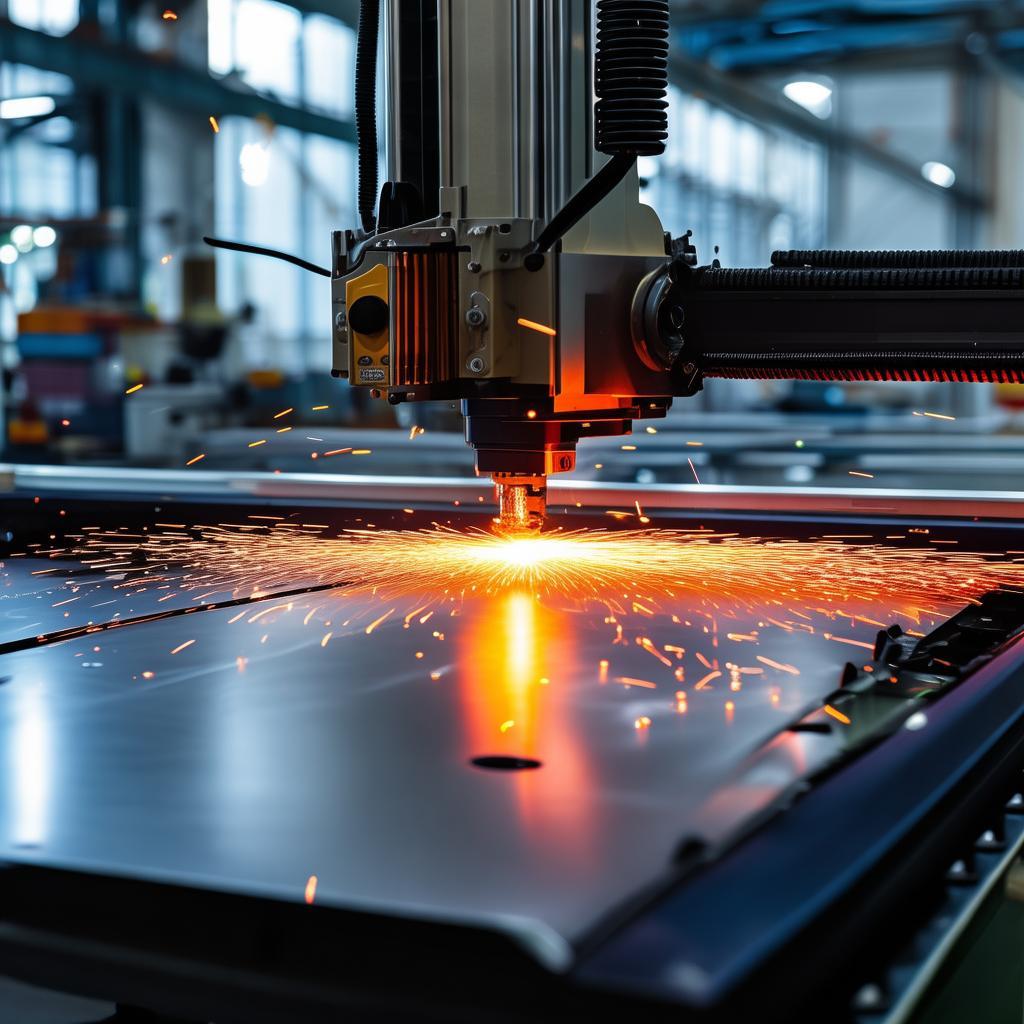
CNC router with T-slot vacuum table
Product Overview
A CNC router with T-slot vacuum table is a CNC machining system built for stable, repeatable workholding on sheet materials and large-format parts. In the woodworking, sign-making, and light industrial fabrication industry, flatness, fast setup, and clean edge finishing are key—this type of router supports high-efficiency cutting, routing, and engraving by combining precise motion control with a vacuum hold-down strategy and integrated T-slot clamping flexibility. For manufacturers and job shops producing panels, cabinetry components, display boards, and composite laminates, the result is safer clamping, improved surface stability, and less rework across production runs.
Key Features
- Strong vacuum workholding for thin, warp-prone sheets helps reduce vibration and shifting during routing and engraving operations.
- T-slot compatibility for hybrid fixturing lets operators combine vacuum hold-down with mechanical clamps and jigs for complex part shapes.
- Improved repeatability between batches supports consistent part dimensions—useful for distributor supply commitments and multi-shift manufacturing.
- Faster changeovers with integrated positioning surfaces reduces downtime versus custom vacuum-only setups.
- Clean, controlled machining workflow supports high-quality engraving lines, accurate pocketing, and smoother edges on board materials.
- Production-ready design for daily job shop use prioritizes stable bed geometry and practical workholding ergonomics.
- Scalable for common fabrication programs for signage, panel processing, and cabinetry component production across mixed SKU environments.
Technical Specifications
| Parameter | Specification |
|---|---|
| Workholding system | Vacuum table with integrated T-slot channels for combined clamping |
| Typical material range | Wood-based panels, MDF/HDF, plywood, acrylic/PMMA sheet, foam boards, composite laminates (application dependent) |
| Control & software compatibility | CNC control platform supporting standard CNC workflows (exact model varies by configuration) |
| Dust & chip management (recommended) | Vacuum-compatible setup for consistent part cleanliness and stable cutting conditions |
| Bed & fixturing approach | T-slot vacuum surface supports vacuum hold-down, plus mechanical tooling and fixtures for irregular geometries |
| Available configurations | Multiple working envelopes and spindle options; vacuum capacity and accessories sized to your material and production profile |
| Operator workflow | Fast loading/unloading for panel processing; designed for repeated batches with consistent fixturing |
| Note | For precise travel sizes, spindle power, and vacuum specifications, please request a tailored quotation for your target materials and part dimensions. |
Application Scenarios
- Signage and display fabrication: rout letters and logos on flat sheets with consistent hold-down during engraving and edge detailing.
- Cabinetry and panel components: produce repeatable blanks and routed features from MDF or similar panels while minimizing warping effects.
- Educational and retail fixtures: cut complex shapes from boards with stable workholding to reduce part shifting.
- Composite laminate processing: maintain flatness for controlled pocketing and profile routing on larger panels.
- Small-batch custom work: use T-slot clamping alongside vacuum for quick setup when SKU variety changes frequently.
Advantages
Compared with generic benchtop routers or single-mode workholding setups, the combination of vacuum hold-down and a T-slot bed improves both surface stability and fixture flexibility. A CNC router with T-slot vacuum table approach reduces the likelihood of sheet micro-movement, which is a common cause of dimensional drift, inconsistent engraving depth, and edge rework. It also enables a hybrid fixturing workflow: vacuum is ideal for flat, thin materials, while T-slots support brackets, stops, and special jigs when part geometry demands more than suction alone.
For operations managing multiple materials and mixed part families, this setup helps standardize your production method—making it easier to train operators, streamline CAM programming assumptions, and maintain quality through repeat runs.
Why Choose Us
As an international manufacturing equipment supplier, we support procurement decisions with practical guidance tailored to your workflow and material profile. Our focus is on delivering a router configuration that fits real-world production needs—workholding strategy included—so you can minimize commissioning risk and reach stable output sooner.
- Requirement-based quoting: we help match working area, vacuum/workholding approach, and accessories to your parts and materials.
- Process-first support: technical answers aligned to cutting, routing, engraving, and batch handling.
- Global logistics readiness: packaging and documentation designed for cross-border deployment.
- After-sales responsiveness: help with setup questions and production optimization during ramp-up.
FAQ
Q1: What kinds of materials work best on a CNC router with a vacuum T-slot table?
A: Flat, sheet-style materials such as MDF/plywood panels and board products are typically strong matches. For plastics, foam, or composites, the best approach depends on sheet thickness, surface porosity, and the recommended vacuum strategy.
Q2: Do I need vacuum only, or can I also use mechanical clamps?
A: You can use both. The T-slot channels allow stops and clamps to complement vacuum hold-down when parts have cutouts, irregular outlines, or require additional referencing.
Q3: Will this setup reduce part shifting during routing and engraving?
A: It is designed to improve stability by holding sheet stock flat and controlled. Proper vacuum coverage, correct seals, and suitable machining parameters further improve consistency.
Q4: Can we configure the machine for our production envelope?
A: Yes. Working area size, spindle and tooling direction, and vacuum accessories are typically configurable to suit your panel dimensions and typical job mix.
Q5: How do I choose between different vacuum/fixturing options?
A: Share your part thickness, material type, and typical cutting/routing operations. We’ll recommend a hold-down strategy that balances vacuum reliability and T-slot versatility for your specific jobs.
If you’re evaluating a routing solution for sheet-based fabrication and want a reliable vacuum + T-slot workholding workflow, contact us for a tailored quotation. Tell us your materials, max part size, and target processes—we’ll suggest the right configuration for your production goals, including the optimal setup for the CNC router with T-slot vacuum table.