
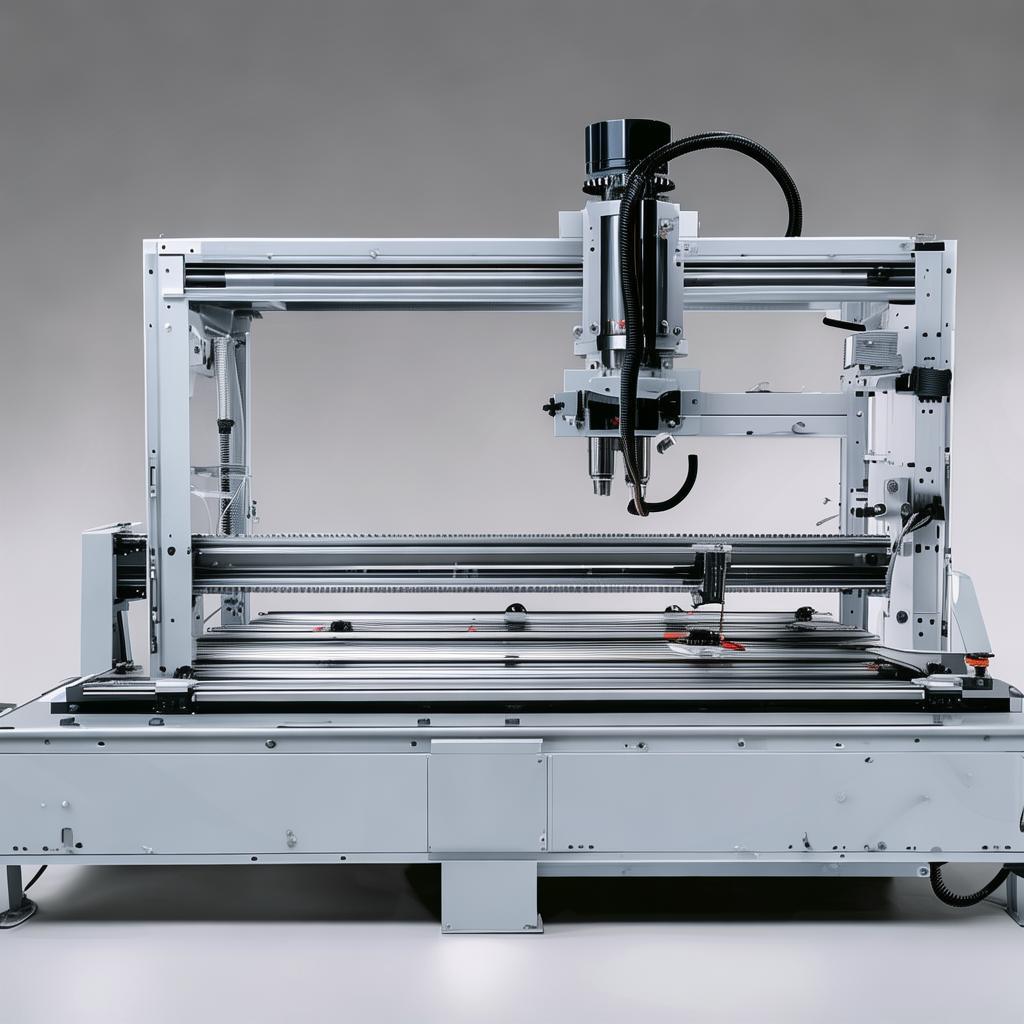
industrial CNC router for factories
Product Overview
An industrial CNC router for factories is a production-grade CNC machining system built for high-volume fabrication of flat parts and sheet goods—supporting repeatable cutting, engraving, drilling, and routing across demanding manufacturing environments. In factory settings, this router is used to automate artwork-to-production workflows, reduce labor-driven variability, and improve throughput for signage, furniture components, packaging, and general industrial fabrication. If your operation needs consistent quality from batch to batch, an industrial CNC router for factories provides the rigid motion, stable control, and tooling flexibility that production teams expect.
Key Features
- Factory-ready cutting performance: Designed for continuous production use, delivering predictable results on a wide range of workshop materials such as wood, composites, plastics, and light metals (material-dependent).
- Stable motion and precise control: Consistent path accuracy helps maintain clean edges, tight geometry, and reliable feature sizes—critical for parts that must assemble correctly.
- Efficient multi-operation capability: Route, drill, engrave, and cut in controlled sequences to shorten handoffs and reduce rework.
- Tooling flexibility for production variants: Supports different cutters and workflows so you can switch jobs with less downtime—ideal for mixed-product factories.
- Operator-friendly programming workflow: Works with standard CAD/CAM outputs, enabling engineers and CNC operators to move from design to production with fewer conversion steps.
- Built to support day-to-day manufacturing demands: Emphasis on robust mechanical integration to help minimize drift, maintain repeatability, and protect uptime.
- Integration-ready for shop-floor processes: Fits into common production layouts, allowing coordinated workflow with nesting, material handling, and batching systems.
Technical Specifications
| Parameter | Specification |
|---|---|
| Machine type | 3-axis CNC router (factory production configuration) |
| Work area | Configurable based on factory requirements |
| Spindle capability | Router spindle for typical industrial CNC routing applications (model-dependent) |
| Drive system | Precision servo or equivalent drive system (configuration-dependent) |
| Controller | Production CNC control with common G-code support (exact model varies) |
| Positioning & repeatability | Built for stable repeat production (exact performance varies by configuration) |
| Dust management (recommendation) | Compatible with industrial extraction systems for typical workshop use |
| Power & environment | Factory installation requirements to be confirmed for your region |
Note: Specifications can vary by the exact configuration supplied for your job size, material mix, and tooling plan. Share your required working envelope and materials for a precise quotation.
Application Scenarios
- Furniture component production—routing panels, trimming edges, and producing repeatable parts for consistent assembly.
- Signage and graphics fabrication—engraving letters, cutting overlays, and maintaining clean outlines across large batch runs.
- Packaging and point-of-sale inserts—nests designed for material efficiency and repeatable feature placement.
- Industrial prototyping and job-shop work—fast turnaround with controlled machining paths for mixed materials and custom dimensions.
- Composite and plastic panel processing—drilling and routing sequences for durable structural components (material-dependent).
Advantages
Compared with generic or entry-level routers, this factory-focused configuration is built to better match real production realities: consistent repeatability, stable motion for multi-operation workflows, and tooling versatility for different part families. For buyers evaluating options, the value is not just faster cutting—it’s fewer setup interruptions, less variance between batches, and smoother integration into your existing CAD/CAM-to-shop-floor process.
- Reduced rework through more reliable routing geometry and repeatable machining paths.
- Lower operational friction with production-oriented workflow from design data to machining.
- Better suitability for mixed production schedules where uptime and flexibility matter.
- A scalable approach—choose the working envelope and tooling plan that match your output targets.
Why Choose Us
When you invest in a CNC system, procurement teams need more than a machine—they need dependable supply, clear documentation, and responsive support across installation and production ramp-up. We focus on practical support for factories and distributors, including configuration guidance, shipping coordination, and assistance in aligning the router to your material mix and production workflow.
- Factory-aligned configuration: We help you select an appropriate working envelope and tooling strategy for your product mix.
- Documentation for procurement: Clear specs, installation requirements, and operational guidance to support internal handover.
- Responsive communication: Direct support to help you resolve questions during quotation, commissioning, and early production.
- Long-term mindset: We aim to keep your production running reliably as your part catalog evolves.
FAQ
Q: What materials can an industrial CNC router for factories process?
A: Typical use includes wood, composite boards, plastics, and similar sheet materials. For any metal processing, feasibility depends on the spindle, tooling, and setup—share your exact materials and thicknesses.
Q: Can we use our existing CAD/CAM files?
A: In most factory workflows, CAM outputs G-code or compatible controller formats. We can review your file type and recommend the most efficient programming path for repeat production.
Q: What determines the best router size for our factory?
A: Primarily the maximum part dimensions, your nesting strategy, and throughput goals. We help match the working envelope so you avoid oversizing costs or restricting capacity.
Q: How do we minimize downtime during job changeovers?
A: Using repeatable tooling setups, consistent workholding, and production-ready CAM templates. We can advise on practical changeover steps based on your part families.
Q: What support is available after purchase?
A: We provide guidance for installation and commissioning and remain available for operational questions during production ramp-up. If you’re a distributor, we can also support documentation handover for end customers.
Ready to improve consistency and throughput on your shop floor? Send us your part dimensions, material list, and target output volume, and we’ll recommend the right configuration for your industrial CNC router for factories project—so you can move from quotation to production with confidence.