
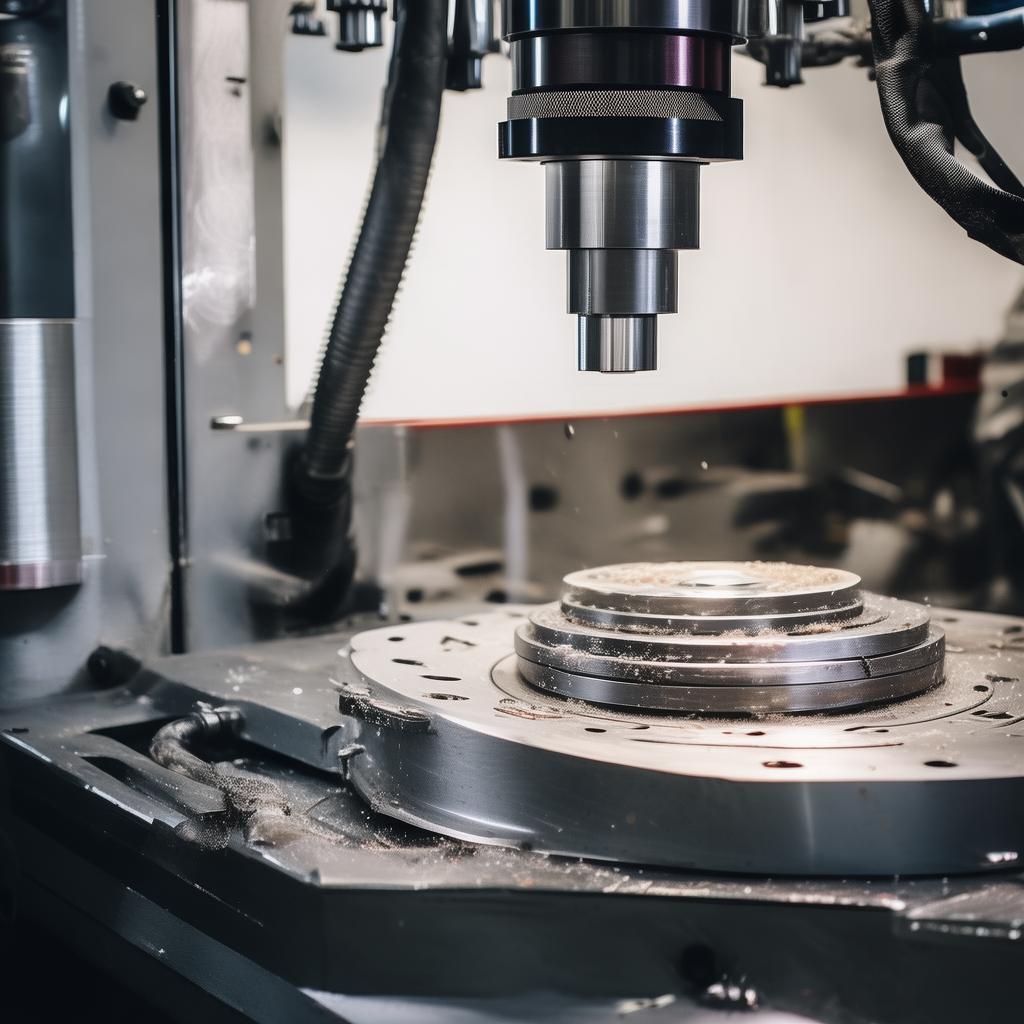
industrial CNC router manufacturer
Product Overview
An industrial CNC router manufacturer typically designs heavy-duty CNC systems for high-precision fabrication workflows—where repeatability, uptime, and tooling consistency matter. This router is built to cut, engrave, and machine a wide range of sheet and board materials using programmed toolpaths, enabling shops to move from manual production to stable, scalable manufacturing. Common use cases include fabrication of signage components, cabinet and panel processing, composite parts, woodworking production, and industrial prototyping where geometry accuracy and efficient cycle planning drive profitability.
Key Features
- Stable machining for repeatable quality: Rigid mechanics and controlled motion help maintain dimensional consistency across long production runs.
- Efficient production with CAD/CAM workflows: Convert designs into toolpaths to reduce setup time and minimize rework.
- Material versatility for job-shop and production: Built to handle common fabrication materials in signage, wood-based panels, plastics, and composites.
- Operator-friendly programming and operation: Streamlined control reduces training burden and supports faster onboarding for technicians.
- Designed for maintainability: Accessible wear components and practical maintenance planning help reduce downtime between shifts.
- Consistent cutting/engraving results: Motion control and motion repeatability support clean edges and predictable engraving depth.
- Scalable for business growth: Suitable for transitioning from prototype batches to steady volume production.
Technical Specifications
| Parameter | Specification |
|---|---|
| Machining Type | Cutting, routing, engraving, profiling |
| Work Area (X/Y/Z) | Configurable by model to match production needs |
| Spindle / Motor Interface | Compatible with standard industrial router spindles (configuration dependent) |
| Control System | CNC motion control with common G-code toolpath execution |
| Positioning & Repeatability | Engineered for stable results in production workflows |
| Compatible File Workflow | Supports CAD/CAM-generated toolpaths for streamlined programming |
| Dust/Chip Handling | Recommended integration options for cleaner operation (system dependent) |
| Power Requirements | Select based on local supply and installed configuration |
| Cooling / Protection | Controller and spindle protection features per configured setup |
Application Scenarios
- Signage production: Rout letterforms and surface panels for consistent visual quality across batches.
- Cabinet and panel processing: Cut and engrave decorative elements with stable repeatability for module-based designs.
- Prototype-to-production runs: Transition from one-off prototypes to small series without rebuilding your process every time.
- Composite and polymer parts: Produce custom components using programmed toolpaths for predictable geometry.
- Workshop job-shops: Handle multi-material jobs with repeatable setup procedures and CAM-based routing.
Advantages
Choosing a purpose-built CNC router from an experienced supplier can outperform generic alternatives in three key areas: production stability, long-term maintainability, and workflow fit. Unlike basic, one-size-fits-all routers, this system is designed around repeatable job processing—helping your operators achieve consistent engraving depth and clean cut profiles. In addition, practical maintenance planning and accessible components reduce production interruptions, which directly supports throughput and delivery commitments. Finally, a CAM-friendly workflow reduces friction between design engineering and shop-floor execution, improving cycle planning from prototype to order.
For buyers evaluating options from different suppliers, partnering with a dedicated industrial CNC router manufacturer is often the differentiator: the machine is matched to real fabrication needs, not just published brochure features.
Why Choose Us
We support international buyers with procurement-focused service and documentation to streamline evaluation and deployment. Our team works to clarify your material types, tooling strategy, and production volume so the CNC router selection aligns with your actual shop workflow.
- Solution-oriented quoting: Provide configuration guidance for your application rather than vague one-size options.
- Support for commissioning: Help coordinate installation readiness and operating setup so your team can start production efficiently.
- Maintainability mindset: Practical guidance for routine upkeep to help you protect uptime across shifts.
- Global buyer communication: Straightforward technical conversations to support distributor and end-user expectations.
If you’re comparing multiple sources, we encourage you to share your drawings, target materials, and batch sizes—our engineers can suggest a suitable configuration and a production-minded setup approach.
FAQ
1) What materials can this CNC router work with?
It is commonly used for signage, woodworking and panel processing, plastics, and composite-type materials. Exact capabilities depend on tooling, spindle configuration, and your job requirements.
2) Do we need CAM software and specific file formats?
Most projects use CAD/CAM toolpath generation with G-code-style execution. We can advise a practical workflow based on your design pipeline and existing software.
3) How do we reduce setup time for repeated orders?
We help you standardize tooling, zeroing methods, and job templates so your team can run repeat work consistently—an approach valued by procurement teams aiming for faster turnaround.
4) What should we consider when choosing the work area and spindle configuration?
Select the working envelope to match your largest parts and the spindle setup to suit cutting vs. engraving tasks. A correct match improves edge quality and reduces tool wear, especially in high-volume production.
5) Is this suitable for production runs or only prototypes?
It supports both. With stable motion and repeatable job setup, it is designed to handle batch production where consistency and throughput matter.
6) Why do buyers prefer an established industrial CNC router manufacturer?
Because configuration guidance, maintainability considerations, and workflow support are typically more aligned with real manufacturing needs than generic listings—helping reduce commissioning risk for international deployments.
Ready to spec a router for your production line? Share your target materials, part sizes, and monthly volume, and we’ll respond with a configuration recommendation and quotation tailored to your application.