
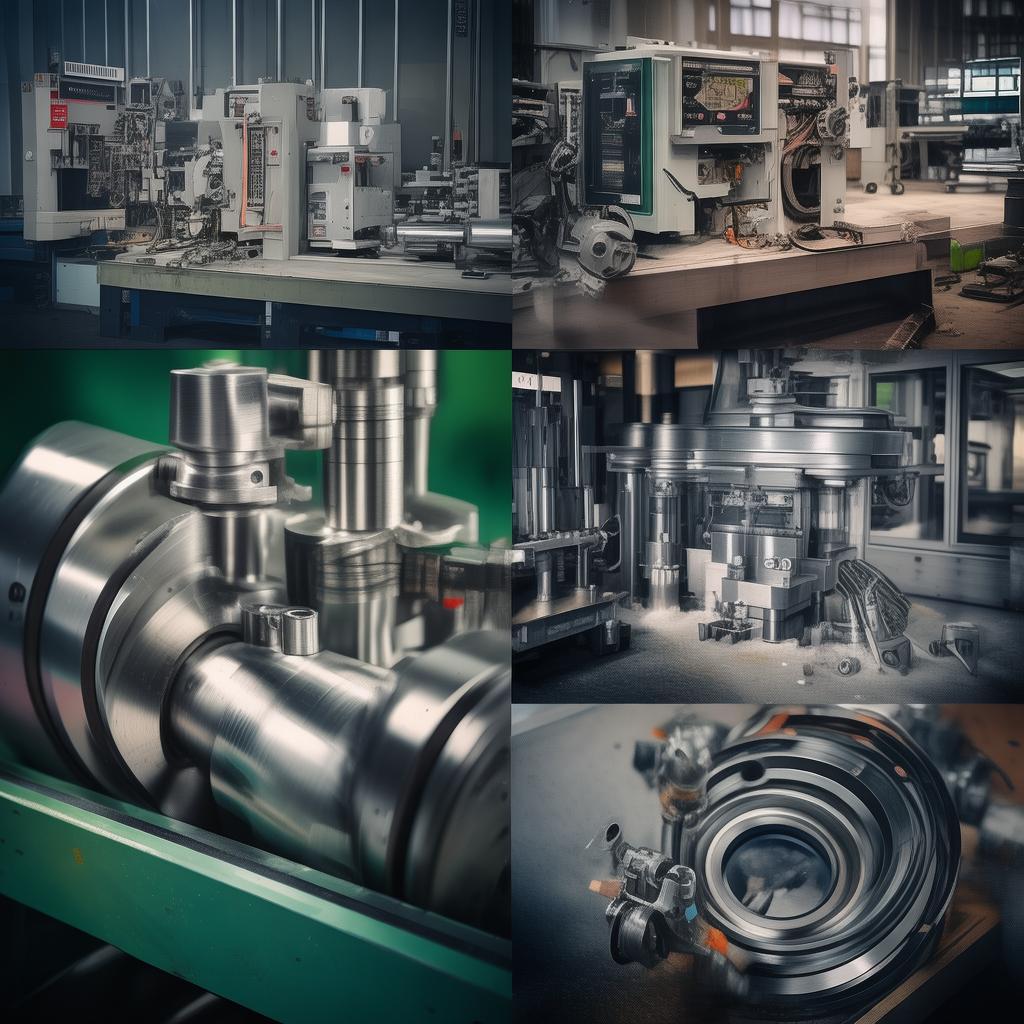
CNC fixture supplier catalog
Product Overview
A CNC fixture supplier catalog is a structured reference of precision workholding solutions—jigs, clamps, vices, modular fixtures, and custom locating systems—used by machine shops and manufacturing engineers to set up CNC machining faster and more consistently. In the metalworking and machining industry, reliable fixtures directly impact part accuracy, repeatability, and production throughput. This catalog-style offering helps procurement teams and engineers quickly compare fixture options, application-fit, and configuration details for repeatable setup across production runs and multi-model programs.
Whether you’re sourcing for automotive components, industrial assemblies, or precision subcomponents, a well-organized fixture catalog reduces design uncertainty and shortens the path from request to validated workholding.
Key Features
- Faster selection & quoting: Browse families of fixture concepts and match them to your part geometry and machining steps.
- Modular compatibility: Move from one job to the next using standardized interface components and scalable subassemblies.
- Consistent locating principles: Improve repeatability across operators and shifts by selecting proven datum schemes and clamping strategies.
- Production readiness: Fixture options designed for stable cutting loads and reliable part positioning throughout the machining cycle.
- Reduced trial-and-error: Clear configuration guidance helps engineering teams validate quickly before committing to full production.
- Distributor-friendly documentation: Catalog layouts support easier cross-referencing for resellers supplying multiple factories and job shops.
- Customization paths: Use catalog baselines for quicker engineering iterations when your part requires unique features or access.
Technical Specifications
| Parameter | Specification |
|---|---|
| Fixture type categories | Modular workholding, vise/clamp systems, locating jigs, custom fixture bodies |
| Workpiece locating method | Datum-based locating points, adjustable stops, repeatable reference features |
| Clamping approach | Mechanical clamping, toggle/bolt clamping options, integrated clamp interfaces (varies by model) |
| Machine interface | Compatibility with common CNC machine mounting schemes (verify with your spindle/table interface) |
| Documentation contents | Layouts, part orientation guidance, recommended tool access notes, configuration guidance per family |
| Customization coverage | Datum redesign, clamp geometry changes, additional stops/pucks, fixture body modifications |
| Quality focus | Repeatable assembly, stable locating, practical manufacturing for consistent production use |
Application Scenarios
- Multi-part machining programs: Select workholding concepts from the catalog set to standardize setups and reduce changeover time.
- Repeat production runs: Use consistent datum and clamping guidance to maintain stable part positioning across batches.
- Distributor sourcing support: Provide end customers with a clear selection framework for jigs and clamps without prolonged back-and-forth.
- New product ramp-up: Shorten early validation by choosing fixture baselines aligned to your machining steps and tool access.
Advantages
Compared with generic fixture listings or informal “custom-only” quotations, this CNC fixture supplier catalog approach focuses on real procurement outcomes: clarity, comparability, and practical fit. Instead of starting from scratch every time, you can evaluate fixture families by their locating logic and configuration intent, then proceed to customization only where needed.
- More predictable lead time planning because selection guidance is available upfront.
- Lower engineering rework by aligning workholding choices with machining access and datum strategy.
- Better repeatability through standardized interfaces and repeatable locating/clamping principles.
- Easier onboarding for operators when setups follow documented orientation and fastening guidance.
Why Choose Us
We support international trade and manufacturing teams with a catalog-first sourcing workflow designed to speed up communication between engineering, procurement, and the shop floor. Our process emphasizes documentation, application fit, and practical fixture design so your team can choose confidently and move to production faster.
- Supplier clarity: Structured references that help reduce ambiguity during RFQ and quotation.
- Application collaboration: Engineering-oriented support to align fixture selection with your part orientation and machining plan.
- Practical manufacturability: Fixture designs intended for stable use and straightforward integration.
- Ongoing catalog improvements: Refinements based on common industry application feedback and sourcing patterns.
FAQ
1) What information do I need to request a relevant fixture option?
Share your part drawing (or CAD), critical datums, target machining operations, and the machine model/interface. If you have prior fixtures, include notes on what worked.
2) How does the CNC fixture supplier catalog help procurement teams?
It streamlines comparison across fixture families, supports faster internal alignment, and reduces back-and-forth by clarifying configuration intent and documentation contents.
3) Can I use a catalog fixture as a baseline for a custom design?
Yes. Commonly, teams start with a suitable baseline workholding concept, then request targeted modifications for locating features, clamps, or tool access.
4) Will the fixtures be compatible with different CNC machines?
Compatibility depends on your machine/table mounting and workholding interface. Provide the machine model or interface requirements so we can align the fixture configuration.
5) What’s the typical next step after reviewing the catalog set?
Shortlist fixture families, then send your part and operation details for a tailored recommendation and RFQ. The catalog set supports quicker, more precise quotation.
If you’d like, request the catalog set for your application and we’ll help you identify the most suitable workholding approach for your CNC machining workflow—send your part drawing and machine details for a quotation-ready recommendation.