
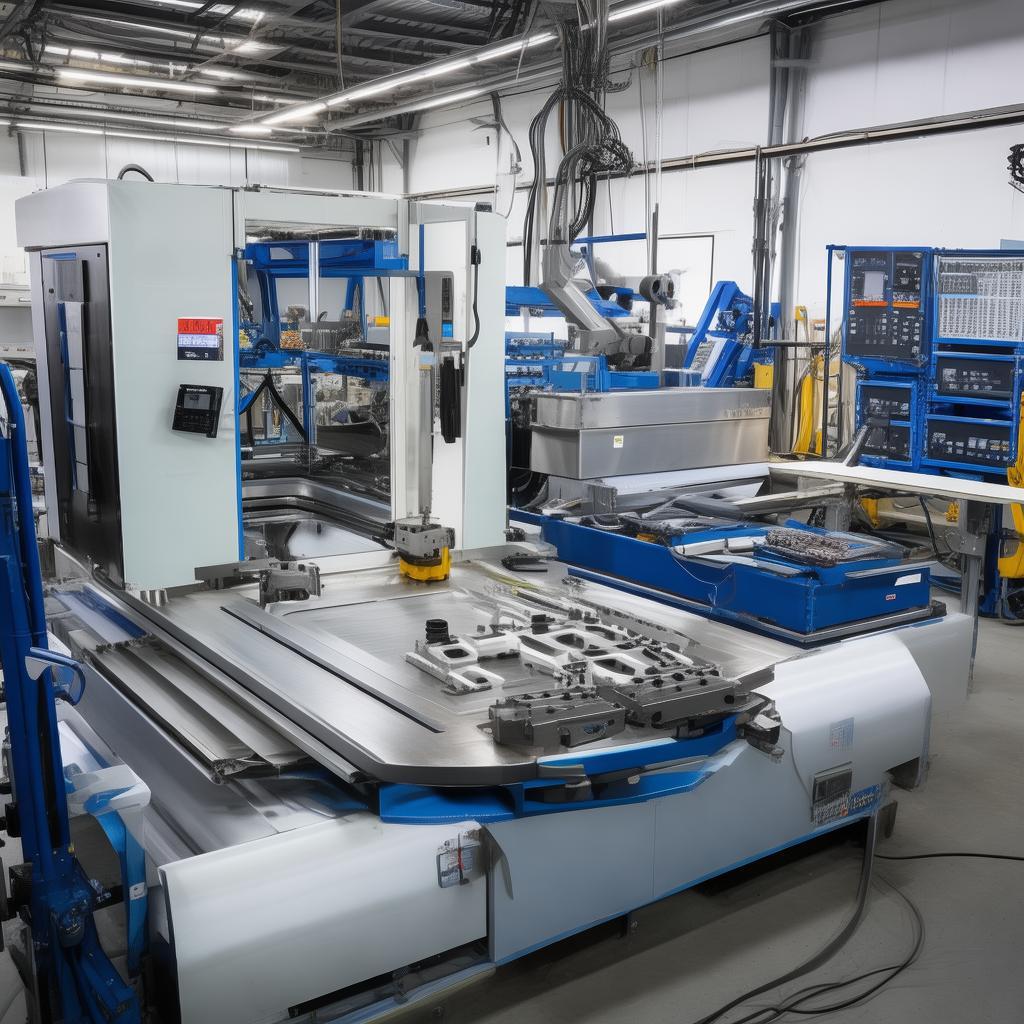
CNC production fixtures
Product Overview
CNC production fixtures are purpose-built jigs and workholding systems designed to locate, clamp, and support parts during CNC machining—helping manufacturers achieve repeatable positioning and stable machining results in production environments. Used widely in the metalworking, automotive components, aerospace subcontracting, and industrial fabrication supply chains, a well-engineered fixture reduces setup variation, improves part consistency across shifts and operators, and protects cycle time targets. Whether you’re producing machined brackets, housings, shafts, or high-mix precision components, reliable workholding is a cornerstone of scalable CNC production. In practice, this means your team can run longer batches with fewer interruptions while maintaining dimensional confidence.
Our fixture solutions support robust CNC workflows, from roughing to finish operations, by combining strong locating strategy, repeatable clamping, and practical shop-floor design for easy loading/unloading.
Key Features
- Repeatable positioning through controlled locating surfaces that reduce variation between setups and operators.
- Stable clamping for consistent machining to maintain stiffness under cutting loads and minimize vibration-related deviation.
- Production-friendly cycle efficiency with ergonomic loading points and workflow-conscious component access.
- Support for multi-operation work so the same workholding strategy can carry parts through multiple CNC steps where feasible.
- Rigidity where it matters using a fixture layout designed to resist deflection at the cutting zones.
- Reduced scrap and rework by strengthening process control around datum definition and clamping consistency.
- Scalable for batch and high-mix so the fixture system can support planned throughput without sacrificing part-to-part repeatability.
- Shop-floor maintainability with durable hardware and serviceable wear elements to improve uptime.
Technical Specifications
| Parameter | Specification |
|---|---|
| Fixture type | Workholding jig / machining fixture for CNC production operations |
| Locating strategy | Datum-based locating surfaces (custom to part geometry) |
| Clamping method | Mechanical clamping with adjustable/replaceable contact elements (as required) |
| Repeatability approach | Controlled contact surfaces and consistent loading sequence to stabilize setups |
| Material (fixture components) | Engineered steels and wear-resistant component selections based on application needs |
| Serviceability | Replaceable wear pads/contact points; maintainable hardware access |
| Compatibility | Designed around machine interface requirements and tool clearance envelopes |
Application Scenarios
- High-volume machining of housings and brackets where consistent datums are critical for assembly fit.
- Multi-part CNC runs in contract manufacturing, improving repeatability across batches and operator shifts.
- Production of precision shafts and cylindrical components that benefit from stable workholding under cutting loads.
- Remachining or secondary operations where the ability to re-locate parts accurately reduces rework risk.
- Tooling for distributors supplying machining centers that need standardized workholding for varied customer part numbers.
Advantages
Compared with generic vises, universal clamping plates, or one-size-fits-all adapters, a purpose-designed fixture for CNC production delivers practical advantages that procurement teams and engineers can feel immediately:
- More consistent part-to-part outcomes by controlling locating and clamping points instead of relying on setup “feel.”
- Better machining stability at the cut location, improving surface finish and dimensional reliability when loads change across operations.
- Lower hidden costs—less scrap, fewer inspection loops, and reduced rework caused by setup drift or inconsistent clamping pressure.
- Faster training and repeatable setups for floor staff, because the fixture guides correct positioning and loading sequence.
- Longer service life through maintainable design choices, including replaceable wear contact elements and accessible fasteners.
If you’re evaluating tooling upgrades, CNC production fixtures built to your part drawings typically outperform improvised setups where accuracy, throughput, and reliability must coexist.
Why Choose Us
We partner with manufacturers and production engineering teams to design and supply workholding solutions that fit real-world CNC workflows. Our approach emphasizes manufacturability, practical shop-floor usability, and clear communication from feasibility to final delivery.
- Collaborative engineering: we align the fixture design with your machining sequence, datum requirements, and tool clearance needs.
- Production-minded design: fixture concepts focus on repeatability, safe handling, and cycle-time practicality.
- Quality-focused manufacturing: we ensure components are built for stable clamping behavior and consistent locating performance.
- Support for iteration: when production feedback is available, we help refine contact points, locating surfaces, and workflow.
- International supply readiness: we structure deliverables to suit global procurement timelines and production planning.
Share your part drawings, material, and machining operations and we’ll confirm the most suitable fixture strategy for your line.
FAQ
1) What do you need from us to design CNC workholding?
We typically request the part drawing with datums, target operations (rough/finish, drilling, milling, etc.), machine model if available, and any existing inspection requirements or tolerance priorities.
2) Can fixtures be designed for multi-operation machining?
Yes. We can plan the workholding strategy around your machining sequence to minimize re-locating errors across operations, improving consistency while reducing setup time.
3) Are these suitable for high-mix production?
For high-mix environments, we focus on repeatable locating and practical clamping. Fixture design can be adapted for short-run stability while keeping loading procedures straightforward.
4) How do you reduce setup errors and rework?
By controlling datum definition and clamping contact points, and by designing the fixture layout to guide correct placement and loading—reducing variation between runs and operators.
5) What is the typical lead time and iteration process?
Lead time depends on fixture complexity and material planning. We’ll share a clear project timeline after reviewing your drawings, machining steps, and delivery expectations, including how iterations and adjustments are handled.
If you’re planning a production tooling upgrade or starting a new part program, send your drawing package and machining operation list—we’ll review your requirements and respond with a quotation-ready recommendation for CNC workholding and dedicated fixture hardware.